

OpenLake cuts AI inference latency with Rust‑based KV offload

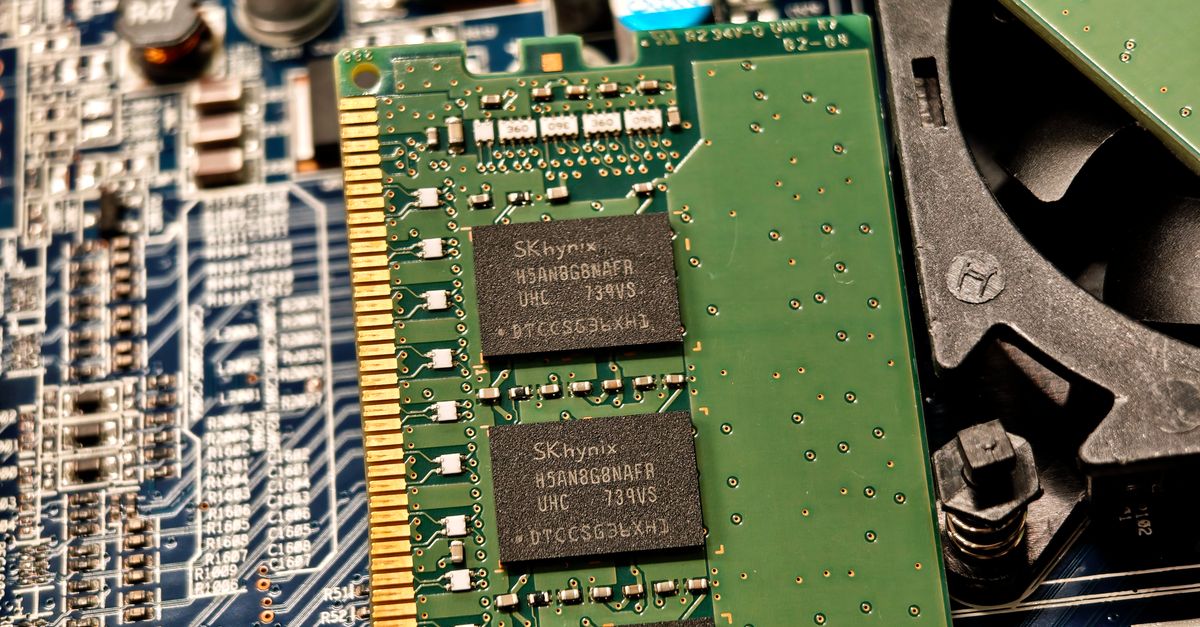
Photo by Adriano Ponte Abreu on Pexels
OpenLake slashes first‑token latency for long‑context models
OpenLake moved KV cache storage from GPU RAM to a persistent Rust engine and saw a 66× speedup on time‑to‑first‑token for a 128K context window. The same engine kept latency under 1 ms while delivering more than a million IOPS. The result is higher accelerator utilization on H100 nodes running Gemma‑4‑31B with a 256K context window.
The announcement arrived on Hacker News alongside a paper titled GPU Offload in Rust: Portable, Safe, and Fast. The paper’s abstract promises a storage layer that is both portable and low‑overhead, matching the claims OpenLake makes in its documentation.
How OpenLake achieves low‑latency offload
OpenLake is built on Rust and the Linux io_uring interface. Rust provides memory safety without a garbage collector, and io_uring lets the engine issue asynchronous I/O with minimal kernel crossings. The combination yields “million+ IOPS within 1 ms” as the vendor’s benchmark states.
The engine sits between the GPU and host storage. During inference, the model writes its KV cache once, then reads it back in milliseconds from host RAM or disk. The path from storage to GPU memory stays short and predictable, which the documentation credits for the low latency.
Integration is deliberately frictionless
OpenLake advertises a drop‑in experience. Users point vLLM workers at the OpenLake cluster and the system routes KV prefixes from any GPU host to any other host in the pool. No code changes are required beyond a --config flag to enable cross‑host offload; the default configuration offloads to the same host.
The project supplies build guides for native, WSL2, and Homebrew environments. Binary releases can be compiled from source, and an S3‑compatible object store can be added in four steps. The open‑source repository invites contributions and tracks issues on GitHub.
Competing approaches and the memory‑first debate
At the same time, another open‑source project, ClawMem, targets on‑device memory for AI agents. ClawMem stores retrieval‑augmented data in a local SQLite vault and integrates with Claude Code, OpenClaw, and Hermes agents. Unlike OpenLake, which focuses on KV cache offload for transformer inference, ClawMem concentrates on agent‑level memory, combining BM25, vector search, and cross‑encoder reranking.
Both projects share a Rust‑centric philosophy and a goal of removing cloud dependencies. ClawMem’s documentation emphasizes “no API keys, no cloud services” and a single‑process CPU/GPU inference path. OpenLake, by contrast, is positioned for large‑scale GPU clusters and claims a “distributed storage for GPU workloads.” The two solutions address different layers of the AI stack, but they illustrate a broader trend: developers are pushing memory management out of opaque cloud services and into controllable, low‑level software.
Why KV cache offload matters now
Transformer models with long context windows generate KV caches that can exceed the memory capacity of a single GPU. When the cache lives in GPU RAM, the accelerator sits idle while waiting for data to be fetched or for the cache to be swapped. Offloading the cache to a fast, persistent store lets the GPU focus on matrix multiplication rather than memory management.
OpenLake’s 66× first‑token improvement suggests that the storage engine can serve cached KV entries faster than a GPU’s own memory bandwidth for certain access patterns. The claim of “million+ IOPS within 1 ms” aligns with the need for sub‑millisecond reads when serving many concurrent inference requests.
Risks and open questions
The performance numbers come from the OpenLake team’s own benchmarks. Independent verification is pending, and the paper linked on arXiv does not yet provide a peer‑reviewed evaluation. It is unclear how the engine behaves under mixed workloads that combine KV reads with heavy object‑store traffic.
Another question is durability. OpenLake promises persistence and durability, but the trade‑off between flash‑based storage latency and DRAM latency is not quantified. Users may need to balance the risk of cache loss against the gain in throughput.
What to watch
The next release of OpenLake is slated to add RDMA support for cross‑node KV fetching. If the feature lives up to its promise, latency could drop further and the solution may become viable for multi‑region AI services. Tracking the performance of the upcoming RDMA‑enabled version, as well as any third‑party benchmarks that compare OpenLake to alternatives like ClawMem, will reveal whether the approach reshapes inference pipelines or remains a niche optimization.
Related Articles
Hacker News picks: low‑RAM LSP, OpenTelemetry slump, AI factory
A look at three Hacker News posts that expose memory‑hungry LSPs, OpenTelemetry adoption stalls, and a near‑self‑hosted AI software factory.

Iran-linked water hacks and Android sanctions loophole
Cyber attacks on US water systems, Google’s Android exemption for sanctioned nations, and rising AI lawsuits signal a shifting cyber policy battleground.

AI code agents move past LSPs to git‑aware, persistent tools
New primitives and agents let developers query code via git entities, add persistent memory, and run autonomous Rust‑based coding sessions.