

Terra's $52M Bet on Southern Defense Amid SpaceX Turbulence

A $52 Million Seed Fuels Southern Defense Ambitions
Terra Industries closed a $52 million seed round on Tuesday, adding an $18 million tranche that brings the total to the headline figure reported by TechCrunch.12345678 The African‑based defense tech firm says the money will finance a network of radar, communications and logistics platforms aimed at countries that have traditionally relied on legacy, imported systems.1234578 The funding round, led by a mix of regional sovereign funds and global venture firms, signals a rare surge of private capital into the Global South’s security ecosystem.1234578 Terra’s founders argue that the continent’s growing demand for autonomous surveillance and rapid response capabilities cannot wait for the slow‑moving procurement cycles of Western governments.1234578 The cash will be used to build production lines in Nairobi and Lagos, and to hire engineers who can integrate satellite links with ground‑based sensors.1234578
SpaceX Engineers Turn to Robotic Steel Factories
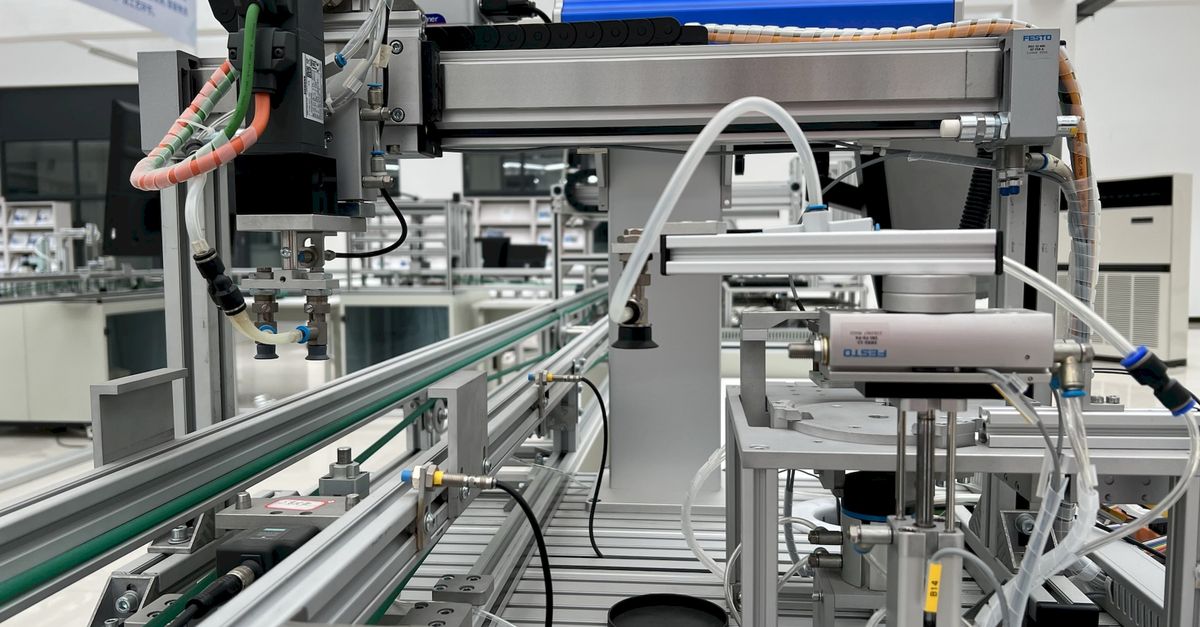
A team of former SpaceX engineers announced plans to construct a robotic factory that will forge steel parts for aerospace and defense customers. In an interview quoted by Ars Technica, the lead engineer stressed that the venture is “not necessarily building in a dogmatic fashion towards full autonomy,” implying a hybrid approach that blends human oversight with high‑throughput robotics. The move reflects a broader trend of talent migration from launch‑centric firms toward modular manufacturing. By producing precision‑machined steel components in a controlled environment, the ex‑SpaceX team hopes to shorten lead times that have been stretched thin by recent launch bottlenecks. Their factory will initially focus on brackets, couplings and heat‑shield segments that feed both satellite bus manufacturers and ground‑based missile defense systems.
Nvidia’s $21 B Stake Ties Silicon to Spaceflight
Nvidia disclosed a $21 billion equity stake in SpaceX, a filing that followed Elon Musk’s announcement of an exclusive arrangement to outfit the rocket company’s data centers with Nvidia‑powered AI accelerators. Ars Technica noted that the stake makes Nvidia one of SpaceX’s largest shareholders, effectively aligning the chipmaker’s hardware roadmap with the launch provider’s compute demands. The partnership gives Nvidia a direct pipeline to the massive telemetry, image‑processing and trajectory‑optimization workloads generated by each Falcon launch. In return, SpaceX gains access to the latest tensor cores, which promise to shave milliseconds off real‑time guidance calculations. Analysts worry that the concentration of AI compute power in a single launch ecosystem could create a new dependency chain, especially as satellite operators scramble for launch slots.
Launch Bottlenecks Push Satellite Operators to Panic
Satellite operators entered “panic mode” this week, according to Ars Technica, after a series of delays and a growing shortage of launch capacity threatened to stall dozens of commercial constellations. The report asked a stark question: “What happens if the Falcon rockets stop flying?” The concern is not hypothetical; recent regulatory reviews have slowed the cadence of Falcon 9 and Falcon Heavy flights, while geopolitical tensions have limited access to alternative launch sites. Operators that depend on SpaceX’s low‑cost rideshare model are now scrambling to secure slots with European and Indian launch providers, often at a premium. The scramble has a knock‑on effect on downstream services such as broadband, Earth‑observation and even defense‑grade ISR payloads that rely on timely deployment. The market’s anxiety underscores how a single launch provider’s operational health now underpins a multi‑trillion‑dollar segment of the global tech economy.
Ukraine’s Strike on Russian Rocket Factory Shows Geopolitical Fragility
In a bold strike early this week, Ukrainian forces hit a major Russian rocket factory with cruise missiles, a move reported by Ars Technica that featured a quoted assessment: “Flamingo missiles were used. A good achievement.” The attack temporarily knocked out a key production line for medium‑range missiles, exposing how quickly a single tactical success can ripple through a nation’s strategic weapons supply chain. The incident arrives at a moment when Russia’s own launch infrastructure is already strained by sanctions and parts shortages. By targeting the factory, Ukraine not only degraded Russia’s immediate warfighting capacity but also highlighted the vulnerability of centralized defense manufacturing hubs. The strike may prompt other nations to reconsider the wisdom of concentrating critical missile and launch hardware in a handful of facilities.
Historical Parallel: Cold War Arms Race and Supply‑Chain Shocks
The confluence of private defense funding, autonomous manufacturing, and launch‑capacity anxiety echoes the post‑World War II arms race that spurred the United States to build a sprawling network of defense contractors and launch sites. The 1973 oil shock forced Western economies to rethink energy security, prompting massive state‑backed investments in alternative fuels and infrastructure. Similarly, the 1996 Telecom Act reshaped the communications market by opening up previously monopolized networks to new entrants. Today’s investors are playing a comparable role: Terra’s seed round mirrors the venture‑backed surge that followed the 1990s internet boom, while Nvidia’s stake in SpaceX resembles the defense‑industry cross‑ownership that characterized Cold War procurement. The lesson from those eras is clear—when geopolitical pressure compresses supply chains, capital flows into the technologies that promise resilience, even if the outcomes remain uncertain.
What to Watch
Regulators in the United States, Europe and Africa will soon decide whether to grant Terra Industries export licences for its radar and communications kits, a decision that could either unlock a new defensive backbone for the Global South or force the company into a costly compliance limbo. At the same time, SpaceX’s launch schedule and Nvidia’s AI hardware rollout will be scrutinized by antitrust authorities wary of a de‑facto monopoly on low‑cost orbital access. Finally, the durability of Russian rocket production after the Ukrainian strike will be a bellwether for how quickly a nation can rebuild critical aerospace capacity under sanctions. Tracking these three decision points will reveal whether the current scramble for hardware, launch slots and AI compute resolves into a more diversified ecosystem or entrenches a handful of dominant players.
Footnotes
Related Articles
Pentagon trims classification on secret space programs
DoD policy lowers secrecy on key space projects, opening tech to allies and industry as the US seeks an edge over China and Russia.

DoD disables ad tracking on soldiers after hostile location
The Pentagon halted advertising IDs on service members' phones after intelligence linked location data to enemy attacks, raising privacy and security stakes.

NASA suits up, Army lasers drones, Russia’s satellite setbacks
NASA trims Artemis IV schedule, forcing a new lunar suit; the Army proves a 20 kW laser can kill drones; Russia’s Rassvet constellation shows early failures.