

Tesla Robotaxi Hits Austin Roads Amid Rising Crash Rate
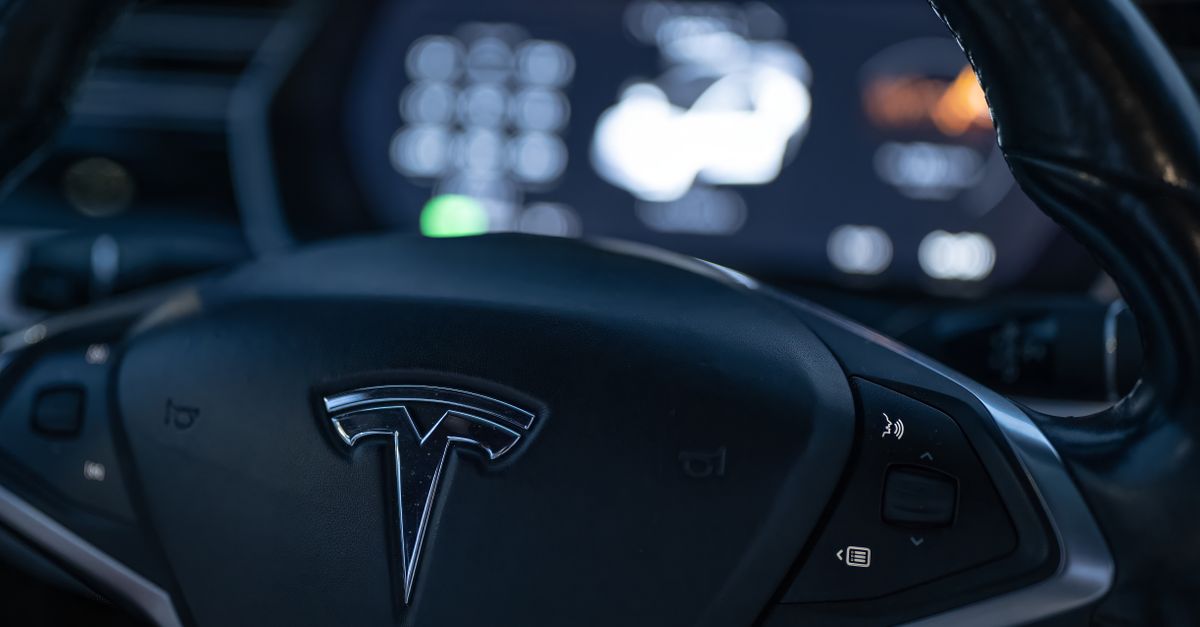
Photo by Vladimir Srajber on Pexels
Tesla’s robotaxi fleet is now cruising Austin without a safety driver, and the crash log is growing faster than the company admits.
Since the service launched in June 2025, the fleet has accumulated roughly 800,000 miles and 14 reported incidents, five of them filed in January 2026 for crashes that occurred in December 2025 and January 2026. All of the accidents involved Model Y vehicles running with the autonomous‑driving system marked “verified engaged.” The incidents range from a 17 mph strike into a fixed object while traveling straight to a 1 mph backup into a pole, and include a collision with a bus while the car was stationary and a 4 mph impact with a heavy truck.
The numbers matter because they translate into a crash every 57,000 miles – a rate that dwarfs Tesla’s own safety benchmarks. The company’s Vehicle Safety Report claims the average American driver experiences a minor collision every 229,000 miles and a major one every 699,000 miles. By those standards, Tesla’s robotaxis are crashing nearly four times as often as a typical human driver in minor incidents, and that figure includes a trained safety monitor in the vehicle who could intervene at any moment.
A deeper dive into the data shows the gap widens when compared with broader industry statistics. The National Highway Traffic Safety Administration’s police‑reported crash average sits at roughly one incident per 500,000 miles. At that yardstick, Tesla’s fleet is crashing about eight times more frequently than the average human‑driven vehicle. Waymo, the only other operator that reports full incident narratives, has logged more than 127 million fully driverless miles with no safety driver, no chase car, and independent research indicating an 80 % drop in injury‑causing crashes and a 91 % reduction in serious‑injury crashes versus human drivers.
The raw crash count is only part of the story; the way Tesla reports (or hides) the details raises fresh transparency questions. All five new incident narratives are redacted as “confidential business information,” a confidentiality provision Tesla exploits while competitors like Waymo and Zoox publish full descriptions. Even more troubling, a July 2025 crash that was originally filed as “property damage only” was quietly upgraded in December 2025 to a “Minor with Hospitalization” after a five‑month delay. That revision reveals at least one passenger required hospital treatment, a fact Tesla never disclosed publicly.
Tesla’s operational model in Austin also diverges sharply from the vision Elon Musk has sold for years. The company plans to run a small, internally owned fleet confined to a geo‑fenced zone of the city, backed by “plenty of teleoperation.” In practice, human operators will monitor the cars remotely and intervene when the autonomous stack cannot resolve a scenario. Musk himself has said, “If you need a geofence area, you don’t have real self‑driving,” underscoring that the service is not the unsupervised, customer‑owned robotaxi he promised back in 2016.
The geo‑fence comes with explicit exclusions. Tesla will avoid intersections it deems too risky, routing vehicles around them rather than attempting a turn. That admission contradicts Musk’s earlier claim that the technology would soon allow a car to drive from Los Angeles to Times Square without a single touch. Waymo, by contrast, operates without such artificial boundaries in four cities, delivering over 200,000 paid rides per week and planning to add 2,000 more vehicles.
Adding to the operational headaches, the United States Patent and Trademark Office recently denied Tesla’s attempt to trademark the term “robotaxi,” labeling it “merely descriptive.” The USPTO cited public sources such as Wikipedia, The Verge, and the autonomous‑vehicle startup Zoox, which already uses the term. A similar denial hit Tesla’s earlier bid to protect the name “Cybercab.” Without a trademark, Tesla must either rebrand the two‑seat, steering‑wheel‑less pods or mount a costly legal challenge that would require detailed marketing materials to prove distinctiveness.
The trademark setback matters because it signals regulatory friction beyond safety. Tesla’s two‑seat pods, slated for deployment next month, will rely entirely on teleoperation rather than an on‑board safety driver. Independent testing last year found Tesla’s Full Self‑Driving system needed a human intervention roughly every 13 miles, a figure that suggests teleoperators could be overwhelmed once the fleet scales. Meanwhile, NHTSA investigations continue into the broader FSD suite, which uses monovision optical cameras that can be fooled by bright sunlight or even a painted road surface.
What to watch: Tesla has pledged a June rollout of the Austin robotaxi service, but the crash rate, the opaque reporting, and the pending trademark appeal all loom as potential roadblocks. Regulators will likely scrutinize the teleoperation model as mileage climbs, while Waymo’s expanding footprint will keep pressure on Tesla to prove its technology can compete without a safety driver. The next NHTSA incident report and any USPTO decision on a revised trademark application will be key signals of whether Tesla can keep the robotaxi dream moving forward.
Related Articles
Florida redirects EV funds to air‑taxi pads as GM and Tesla push
Florida repurposes $200M EV‑charger money for air‑taxi pads while Tesla hits 10 million EVs and GM rolls out a new Ultium platform, reshaping the electric‑mobility landscape.
Microsoft Bans School Data for AI as Labor Pushes Back on Tech
Microsoft agreed not to use teacher‑union data for AI training, while unions, model releases, and autonomous‑car safety signal a new friction point for the industry.
Listen Labs Walks From $1.5B Deal as AI Governance Tensions Rise
Listen Labs drops a $1.5 billion Series C as AI startups face funding shifts, board changes, and mounting regulatory pressure.