

Amiga Unix resurfaces on modern hardware

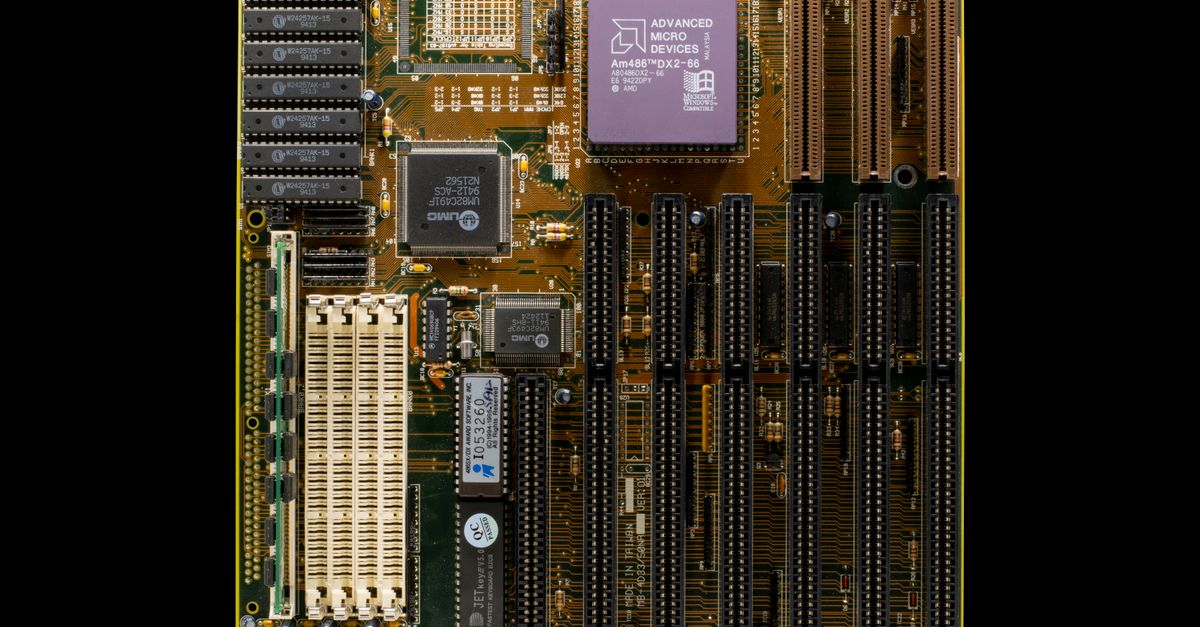
Photo by Nicolas Foster on Pexels
A vintage OS gets a 2026 makeover
The amateur‑run site amigaux.org announced a working Amiga Unix (Amix) build that runs on original 68040 and 68060 boards and on today’s accelerator hardware. The project adds a modern toolchain, a functional package manager, and drivers for peripherals that never existed back in 1990. All changes are committed in the open and documented in a living “grimoire” written by contributors asokero, isoriano1968, and jusii.
The effort is more than a nostalgic curiosity. By targeting both real Amiga hardware and the WinUAE emulator (supported since version 2.7.0 in 2013), the team gives developers a concrete path to run a genuine AT&T System V Release 4 Unix on machines that were once priced at several thousand dollars.
Why resurrect a 30‑year‑old Unix?
Die‑hard Amiga fans still tinker with the platform, but most of them have long ago settled for AmigaOS or Linux ports. Amix offers a glimpse of what Commodore envisioned: a fully compliant SVR4 system that could compete with early workstations. For anyone who has stared at a Mac OS X terminal and wondered what the Amiga would have looked like under the hood, Amix is the closest thing to that alternate history.
The revival also serves preservation. The original Amiga Unix binaries, documentation, and driver source are scattered across defunct FTP sites and personal archives. By aggregating them on amigaux.org, the community prevents those artifacts from disappearing into the “rare” eBay listings that now fetch six‑figure sums for a working Amiga 3000UX.
The friction points: hardware scarcity and broken tooling
Running Amix on a 68060 accelerator is not a plug‑and‑play experience. The hardware required—original Amiga 2500UX or 3000UX motherboards, MMUs, and sometimes a tape drive for installation—is hard to locate and expensive. Even when the chassis is found, the package manager that shipped with the original OS is described as “completely broken,” forcing users to hand‑craft installations.
The new project mitigates these pain points with a fresh package management system and a suite of drivers for cards that never saw official support. Yet the underlying OS still inherits the quirks of a System V implementation designed for a world without GNU tools. Administrators accustomed to modern Linux will need to relearn directory layouts, init scripts, and a set of utilities that feel both familiar and archaic.
A brief history of Amiga Unix
Commodore‑Amiga released Amiga Unix, informally known as Amix, in 1990 as a full port of AT&T System V Release 4. The product shipped with the Amiga 3000UX workstation, making it one of the first SVR4 ports to the Motorola 68k architecture. Marketing material bragged about being “Born To Run UNIX SVR4” and highlighted the OPEN LOOK graphical environment that appeared on the Sun Microsystems and Unix International booths at the 1991 Uniforum show.
Earlier prototypes—like the Amiga 2500UX previewed at CeBIT in 1988—promised a dual‑boot capability between SVR3 and AmigaDOS, an X Window System interface, and a proprietary windowing system touted as “very fast and more flexible.” The 2500UX featured a 14.3 MHz 68020 CPU, 5 MB of RAM, an 80 MB hard drive, and a 150 MB tape system. Pricing hovered around $5,000 for the full Unix system and £1,700 for an upgrade kit that added a 68020 and MMU to an existing Amiga 2000.
By the end of 1989, Commodore shifted focus to the Amiga 3000, a 68030‑based machine slated to run SVR4. The product never gained mass adoption; the niche market of Unix‑savvy developers found the installation process cumbersome, and the Amiga brand was already in decline. The last official updates to Amix disappeared in the late 1990s, leaving the OS frozen in a state that modern users must now resurrect.
Modern tooling meets retro hardware
The 2026 revival leverages AI‑assisted development to automate driver generation and patch creation. The project roadmap lists a Wolf3D port, CD‑ROM support, and a new software package management system as concrete milestones. Documentation is being written for both human readers and large language model agents, a nod to the fact that many prospective contributors will be using AI tools to navigate the arcane codebase.
Community infrastructure now includes a GitHub organization (amiga.dev) and a Discord server where developers can share patches, test builds, and troubleshoot hardware quirks in real time. An English‑language subforum on the Amiga Board offers a place for legacy users to ask questions about installing Amix on a refurbished 68040 machine or configuring it inside WinUAE.
The open‑source nature of the effort means that every driver, patch, and build script is visible as it is written. This transparency contrasts sharply with the original closed‑door development at Commodore, where the team reportedly quit the day version 1.0 shipped—a legend that underscores the project’s grassroots ethos.
What to watch next
The next major checkpoint is the release of a stable package manager that can resolve dependencies without manual intervention. Equally important is the Wolf3D port, which will be the first sizable 3D application to run on a genuine Amiga Unix system in over three decades. Finally, keep an eye on the community’s call for third‑party software and exotic hardware drivers; contributions from the broader retro‑computing ecosystem could determine whether Amix becomes a living platform or remains a museum piece.
If the project can deliver a usable package ecosystem and keep the driver backlog shrinking, the revived Amiga Unix may finally fulfill the promise that Commodore hinted at in 1990: a truly standards‑compliant Unix workstation built on the beloved Amiga chassis.
Related Articles

Open‑Weight AI Sparks Self‑Improvement, Acquisitions
Anthropic's self‑improving models, Nvidia's $13B Hugging Face deal, and rising ethical lawsuits illustrate the tension around open‑weight AI.

OpenAI halves GPT‑5.6 Sol price as Moonshot AI rolls out cheaper
OpenAI cuts GPT‑5.6 Sol fees by 50% while Moonshot AI launches Kimi K2.5 and K3, models that beat GPT‑5 on reasoning and bring trillion‑parameter open‑source to the market.

AI reasoning traces, data agents, and Rust SAST shift tooling
New methods expose AI model reasoning, while open-source tools Inconvo and PySpector bring safer data queries and faster Python security analysis.