

Meta staff say Lula’s accounts were restricted in Brazil election

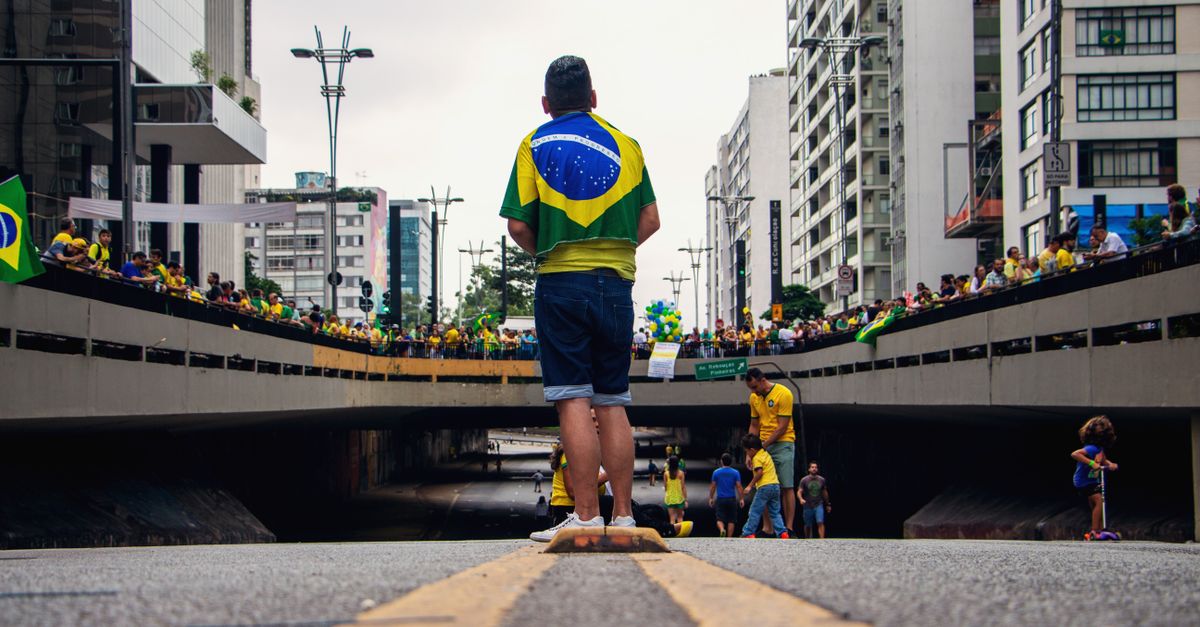
Photo by Waldir Évora on Pexels
Meta employees reported that accounts linked to Brazil’s President Luiz Inácio Lula were restricted during the October 2026 election. The claim surfaced in an Al Jazeera report published on October 16, 2026, which quoted internal messages from the company’s Brazil team.
The report cited a Slack thread where moderators noted that several of Lula’s verified pages received temporary blocks and content demotions. The same thread referenced a policy memo dated September 30 that warned of “potential coordinated inauthentic behavior” around the campaign. No official statement from Meta has confirmed the restriction, and the company’s public policy blog remains silent on the specific incident.
The restriction claim
The internal exchange described a workflow where the moderation queue flagged posts from Lula’s accounts for review by a regional team in São Paulo. Moderators applied a “limited reach” label that reduced the posts’ visibility in the News Feed algorithm. The label, according to the Slack screenshots, is typically reserved for content that violates the platform’s misinformation rules.
A senior engineer in the thread argued that the label was applied preemptively, citing “political sensitivity” rather than concrete policy breaches. The engineer’s comment was marked with a question mark, indicating uncertainty about the justification. The lack of a clear violation record suggests the restriction may have been a precautionary measure rather than a rule‑based enforcement.
Meta’s public community standards outline a “political content” policy that requires higher scrutiny for high‑profile figures during election periods. The policy allows for temporary reach reduction when content is deemed “potentially misleading” pending verification. The Slack thread did not reference a specific misleading claim, only a generic risk assessment.
Meta’s moderation policy in Brazil
Meta has operated a dedicated election‑integrity team in Brazil since the 2022 presidential race. The team publishes quarterly transparency reports that break down enforcement actions by category. The most recent report, released in July 2026, listed 1,842 actions against political actors, of which 12% involved reach‑limiting measures.
The Brazil team’s guidelines emphasize “minimal interference” while protecting the public discourse from coordinated manipulation. However, the guidelines also grant regional leads discretion to apply “soft restrictions” when the risk of misinformation is high. The Slack thread shows that this discretion was exercised without a documented violation.
Critics have argued that the policy’s vague language creates room for subjective judgments. A former Meta policy analyst, speaking on condition of anonymity, warned that “soft restrictions can be weaponized when political stakes are high.” The analyst pointed to prior incidents in 2023 where opposition candidates complained of reduced visibility, though Meta later attributed those cases to algorithmic variance.
Historical precedents and political pressure
Meta has faced scrutiny over content moderation in Brazil before. In the 2023 municipal elections, the company was accused of downranking posts from a coalition of left‑leaning candidates. An independent audit later found that the algorithmic dip was statistically insignificant but acknowledged “perceived bias” among voters.
The Brazilian government has also pressed Meta for greater compliance with local content laws. In March 2026, the Ministry of Justice issued a notice demanding that the platform remove posts violating the new “Fake News Prevention Act.” Meta appealed the notice, arguing that the law conflicted with its global policy on freedom of expression.
These tensions have created a feedback loop: political actors demand stricter enforcement, while civil‑society groups warn that over‑enforcement threatens democratic dialogue. The Lula restriction claim sits at the intersection of these forces, highlighting the difficulty of balancing platform safety with political neutrality.
Implications for platform governance
If the restriction was indeed applied without a documented policy breach, it could set a precedent for preemptive reach‑limiting during future elections. That precedent may embolden other platforms to adopt similar soft‑restriction tools, potentially reshaping how political speech is amplified online.
Conversely, the episode may pressure Meta to clarify its internal decision‑making process. Transparency advocates have called for the release of the Slack logs and the policy memo referenced in the report. Such disclosure would allow researchers to assess whether the action was an outlier or part of a broader pattern.
The broader tech industry is watching the case for signs of regulatory backlash. Brazil’s data protection authority, ANPD, has hinted at possible fines for “unjustified interference” with political content. Any enforcement action against Meta could ripple into other jurisdictions that are drafting similar election‑integrity rules.
What to watch
The next transparency report from Meta, due in December 2026, will be the first formal data point on enforcement actions taken during the current election cycle. Observers should track the number of reach‑limiting labels applied to political accounts, especially those of high‑profile candidates. Additionally, any response from Brazil’s ANPD or the Ministry of Justice will signal how regulators intend to hold platforms accountable for soft‑restriction practices.
Related Articles

Meta's ad revenue stalls as EU rules and US lawsuits bite
Meta sees ad revenue slow after EU's less‑personalized ads rule, faces a $25 billion fine and a state lawsuit over scam ads.

Meta hit with $25B New Mexico penalty and $725M settlement
Meta must pay a $25 billion New Mexico penalty and a $725 million federal settlement, tightening the noose around its data practices.
Meta Hit with $25 Billion Penalty Over Cambridge Analytica Data
A court ordered Meta to pay $25 B for privacy violations tied to the Cambridge Analytica scandal, raising questions about regulation and tech security.