

Mars Cloud, Ice Sheet Growth, and Gravitational Waves

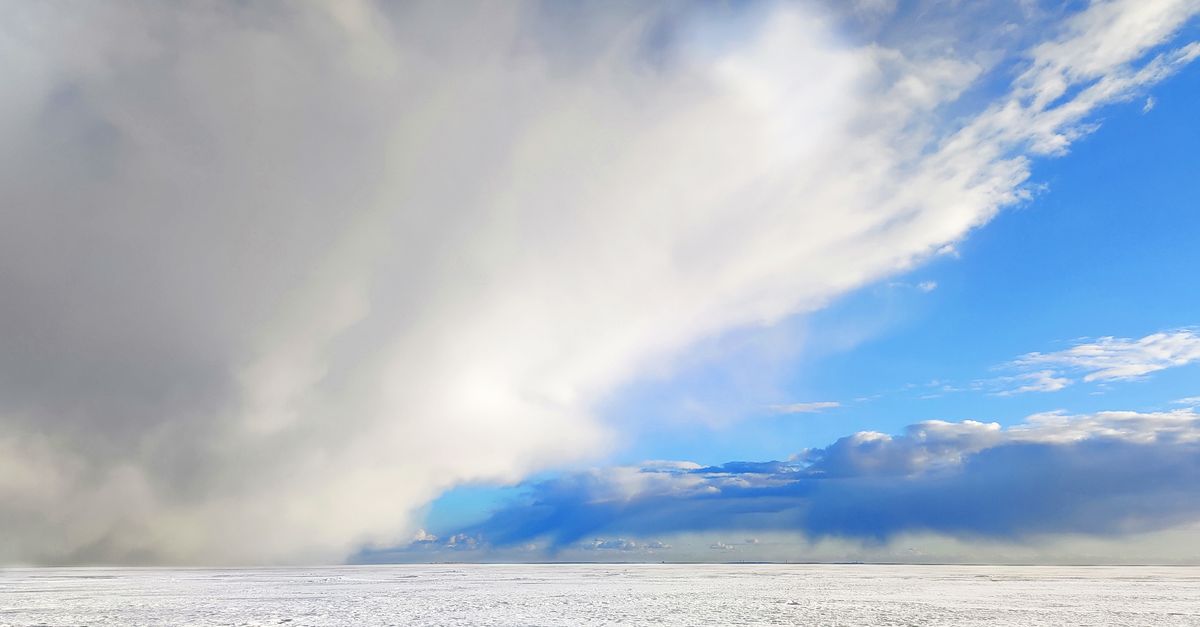
Photo by Aleksandr Slavich on Pexels
A 1,000‑mile Martian cloud hints at unseen ice physics
A model published this week predicts that a cloud stretching roughly 1,000 miles across Mars could be forming ice through mechanisms never recorded on Earth.12345 The simulation ties the cloud’s altitude and temperature profile to a phase change that bypasses the familiar hexagonal crystal lattice of terrestrial ice.12345
Ars Technica notes that the model leverages high‑resolution orbital temperature data and recent radar returns from the planet’s polar regions.2 If the physics holds up, scientists will have a natural laboratory for studying supersaturated vapor dynamics under Martian gravity, a regime that standard lab chambers cannot replicate.3
The finding arrives as NASA prepares its next polar orbiter, which will carry a lidar capable of probing the cloud’s particle size distribution. Direct measurements could confirm whether the hypothesized nucleation pathway produces amorphous ice, a form that remains largely theoretical for planetary bodies.
Beyond pure curiosity, the result could affect how we assess water availability for future crewed missions. Amorphous ice stores latent heat differently than crystalline ice, potentially altering subsurface stability forecasts for habitats.
Laurentide Ice Sheet remnants begin expanding again
A separate study re‑examines the tiny vestiges of the once‑massive Laurentide Ice Sheet that covered much of North America during the last glacial maximum. Contrary to earlier reconstructions, the researchers argue that the remnants started expanding roughly 2,000 years ago, a period previously thought to be a terminal decline.67
The paper, also covered by Ars Technica, points to subtle shifts in sediment layers and isotopic signatures that indicate renewed accumulation.67 The “tiny remains” are now gaining thickness at a rate that, while modest, reverses a millennial‑long trend of shrinkage.67
The authors caution that the resurgence is localized to high‑altitude pockets in the Canadian Shield.678 They attribute the growth to a brief cooling episode documented in tree‑ring chronologies and corroborated by ice‑core data from Greenland.
If the trend persists, it could refine models of post‑glacial rebound and sea‑level projections. Current climate‑impact assessments often treat the Laurentide remnants as a static, diminishing factor; this new evidence forces a reassessment of their dynamic role in regional hydrology.
LIGO’s first direct detection reshapes observational astronomy
On September 14, 2015, the upgraded Laser Interferometer Gravitational‑Wave Observatory (LIGO) recorded a fleeting ripple in space‑time that matched the signature of two black holes spiraling together. The signal, announced to the world on February 11, confirmed a century‑old prediction by Einstein and opened a new observational channel for astrophysics.
The merger involved black holes of 29 and 36 solar masses, as reported by the LIGO collaboration. Vicky Kalogera of Northwestern University described the moment as “opening our ears” to a previously silent universe. Caltech’s David Reitze added that the community should expect both expected and unexpected detections as sensitivity improves.
Ars Technica highlights that LIGO’s ability to detect gravitational waves from massive, non‑luminous events offers a shortcut to spotting phenomena that optical telescopes miss entirely. In the case of the 2015 event, no light was emitted, yet the gravitational wave carried away more than three solar masses of energy in a fraction of a second.
The detection also validated the interferometer’s 40‑year‑old design concept, proving that kilometer‑scale laser arms can resolve length changes smaller than a proton. Since the initial run, upgrades have pushed the observable volume outward, promising routine observations of binary neutron star mergers and possibly signals from core‑collapse supernovae.
What to watch next
The three discoveries converge on a single theme: instruments probing extremes—whether Martian atmospheric dynamics, lingering glacial ice, or space‑time itself—are delivering data that challenge existing theories. For Mars, the next lidar passes will test the amorphous‑ice hypothesis. For the Laurentide remnants, high‑resolution GPS surveys slated for the next decade will track any further thickening. For LIGO, the upcoming observing run (O4) aims to increase sensitivity by a factor of two, which could push detection horizons out to several gigaparsecs.
Stakeholders should monitor three concrete milestones. First, the Mars orbiter’s lidar dataset expected in mid‑2027, which will either confirm or refute the new cloud model. Second, the publication of a revised North American glacial‑isostatic adjustment model incorporating the recent Laurentide growth signal, due in 2028. Third, the official O4 run schedule and the first public data release, projected for early 2027, which will reveal whether LIGO can capture sub‑solar‑mass black hole mergers—a class of events that would upend current formation theories.
Together, these benchmarks will shape research funding, mission planning, and the theoretical frameworks that underlie planetary and astrophysical science for years to come.
Footnotes
Related Articles

GitHub’s ICE Deal Triggers Rapid Employee Strike
GitHub’s $200,000 contract renewal with ICE sparked a mass employee letter and a swift internal protest, reviving the No‑Tech‑for‑ICE debate.
Psyche’s Unexpected Mars Snapshots Offer Fresh Planetary
NASA’s Psyche probe sent back rare images of Mars, giving scientists a deep‑space view that could sharpen planetary models.

The Next Giant Leap: NASA's Ambitious Plans for Space Exploration
From returning to the Moon to exploring Mars, NASA is pushing the boundaries of space travel. But with budget cuts looming, can the agency achieve its ambitious goals?