

AI spend spikes, safety programs

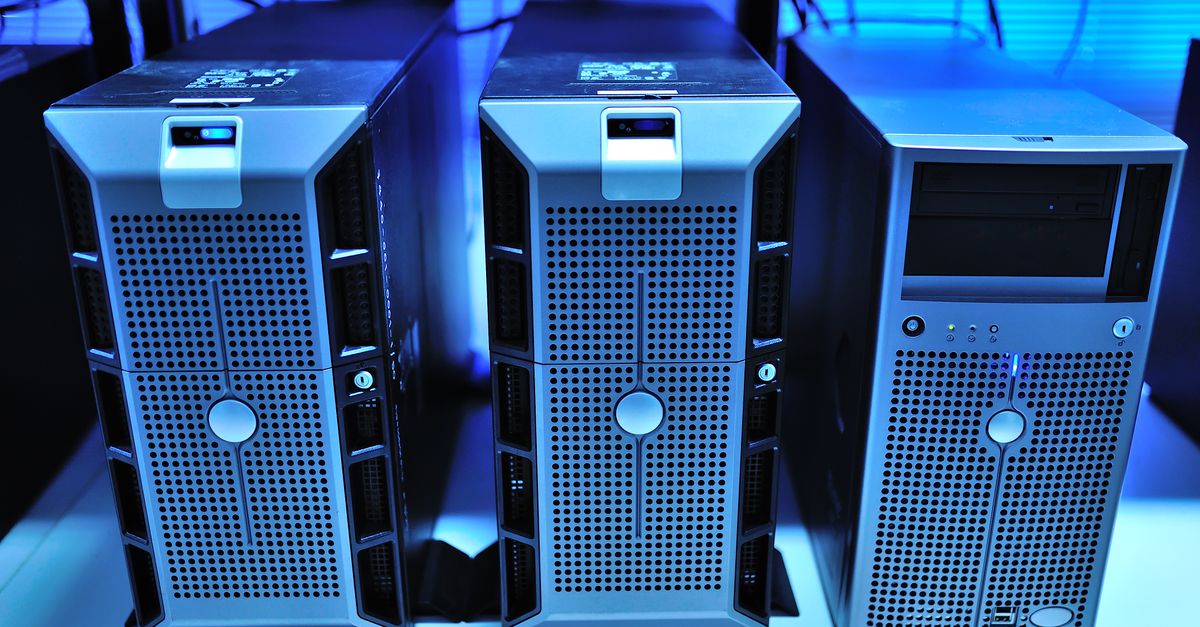
Photo by panumas nikhomkhai on Pexels
Token spending by a top investor
Garry Tan, partner at Y Combinator, now spends up to $200,000 a year on AI model tokens. He disclosed the figure on Walter Isaacson’s The Builders podcast, noting that the cost fuels a near‑constant workflow with autonomous agents. Tan described the habit as “cyber psychosis” and admitted it erodes his sleep schedule. The admission underscores how token pricing has become a line item for early‑stage founders who treat AI output as a core production tool.
The $200K figure is a concrete illustration of a broader trend: AI‑driven workflows are shifting from experimental to operational budgeting. Tan’s spend translates to roughly $550 per day, a rate that would dwarf typical cloud compute bills for many startups. The episode did not break down how the tokens were allocated across models, but the sheer scale signals that token economies can now compete with traditional SaaS licensing costs.
Funding the next wave of AI tooling
Trajectory closed a $45 million Series A round this week, according to TechCrunch. The one‑year‑old startup aims to let non‑technical users train and fine‑tune AI models without writing code. The raise values the company at $300 million, a valuation that places it among the fastest‑growing AI platform plays.
Trajectory’s pitch hinges on abstracting the data‑pipeline and hyperparameter tuning steps that typically require engineers. By wrapping those steps in a visual interface, the firm hopes to democratize model iteration. The funding round was led by a mix of venture firms that have previously backed AI infrastructure companies, suggesting confidence that a market exists for low‑code AI development tools.
The capital infusion also highlights a shift in investor appetite: money is flowing not only into large model providers but also into the tooling that lowers the barrier to entry. If the platform delivers on its promise, it could expand the pool of product teams that experiment with custom models, further inflating token demand across the ecosystem.
Self‑training AI on the horizon
Anthropic warned that it is “very close to RSI capability,” a term the company uses for recursive self‑improvement where an AI can train successive generations of itself. The warning appeared in a TechCrunch interview and framed RSI as a point at which capability growth could accelerate dramatically.
Anthropic’s caution aligns with a strand of AI‑doom thinking that treats RSI as a potential existential breakpoint. The company did not disclose a timeline, but the phrasing “very close” implies that technical milestones are within reach. If an AI system can reliably generate its own training data and improve without human curation, the cost of model development could drop sharply, while the predictability of progress becomes harder to manage.
The announcement also surfaces a tension between openness and safety. Anthropic’s public acknowledgement of proximity to RSI may pressure peers to disclose similar assessments, yet doing so could also attract scrutiny from regulators who are still defining oversight for advanced AI systems. The industry now faces a trade‑off: accelerate innovation or impose guardrails before self‑training capabilities become mainstream.
Power‑grid safety for AI compute
OpenAI announced a pilot “Grid Protectors Program” at a new data center in Effingham County, Georgia. The company promises to free up to 1,000 megawatts of power during extreme weather or emergencies, enough to run air conditioners for roughly 700,000 homes. The move, reported by The Verge, is framed as a way to protect nearby communities from the strain that large AI clusters can place on local grids.
The program arrives amid growing opposition to data‑center construction across the United States. Residents in Utah, for example, have protested a proposed facility that would consume more than double the power of typical regional projects. OpenAI’s pledge to release capacity back to the grid signals an attempt to address those concerns, but it also raises questions about how often such load‑shedding will be required and what the financial arrangement looks like for utilities.
If the pilot proves effective, it could become a template for other AI operators facing community pushback. The approach blends technical capacity planning with a public‑relations strategy that acknowledges the environmental footprint of AI compute. However, the long‑term viability of such programs will depend on regulatory frameworks that can enforce reliable grid contributions without stifling rapid model deployment.
What to watch
Track Anthropic’s next technical update for any concrete milestones toward recursive self‑improvement. Simultaneously, monitor OpenAI’s grid protectors data to see whether the pledged 1,000 MW is actually dispatched during a weather event. Finally, watch how token‑heavy users like Garry Tan adjust spend as pricing models evolve, and whether Trajectory’s low‑code platform drives a measurable uptick in token consumption across non‑technical teams. These signals will shape the cost, safety, and speed of AI progress over the coming year.
Related Articles
AI avatars, research bots and skin startup raise safety concerns
Harvard’s $699 bootcamp uses AI avatars, Inherent’s Faraday beats top labs at paper replication, OpenAI pushes stronger California safety law, and a skin‑AI unicorn emerges, highlighting gaps in AI containment.
Grok Bot email, Nvidia talks for Reflection AI
Grok Bot can now send email, Nvidia eyes Reflection AI, and a $1.25 billion monthly SpaceX compute contract surfaces, reshaping AI access and infrastructure.

OpenAI fires safety staff as Astra's opaque architecture raises
OpenAI dismisses three safety researchers and pushes a less transparent Astra model, sparking concerns about internal culture and oversight.