

Google feeds Gemini subscriber chats into model training


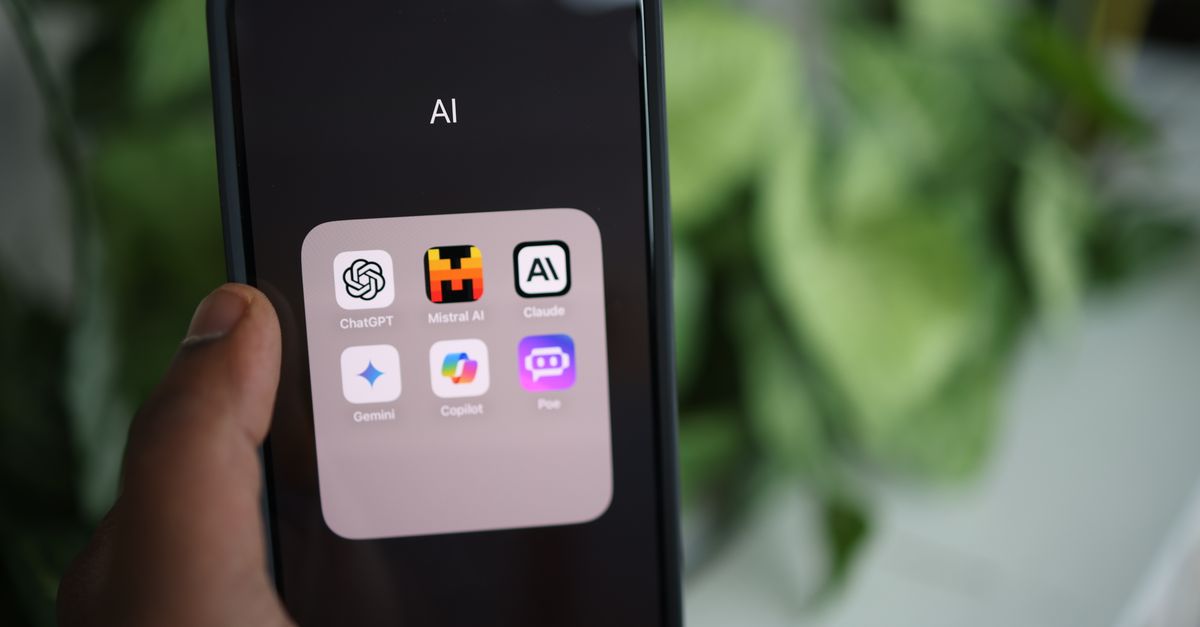
Photo by Mikhail Nilov on Pexels
Google is using paid‑subscriber chat logs from Gemini to train its models. The practice raises privacy questions for users who assumed a subscription shielded their data.
Gemini’s settings include a “Keep Activity” toggle that, when on, routes saved conversations to Google’s training pipeline. The company’s support pages state that a subset of chats are reviewed by human reviewers and retained for up to three years, even after a user deletes the activity. Human reviewers may see the content, and Google warns users not to enter confidential information. Turning off “Keep Activity” stops training but also erases chats after 72 hours. The policy applies to all personal Google AI subscribers; paying for the service does not exempt a user.
The policy is documented in two Google support articles. One page explains that Gemini app activity improves Google services when the Keep Activity setting is on. Another page details that reviewed chats are not deleted with the user’s activity and may be kept for three years. Both pages advise users to avoid sharing sensitive data. The lack of a granular opt‑out means users must choose between data retention and continued access to the chat history feature.
How Gemini captures and stores chat data
When a user enables Keep Activity, Gemini logs each message and its metadata to Google’s internal data stores. The logs are then fed into the same training pipelines that power Gemini’s language models. The pipelines ingest billions of tokens from many sources, and user chats become part of that corpus.
Human reviewers access a sampled subset of these logs. Reviewers read the content to improve response quality, flag harmful outputs, and refine safety filters. Google’s documentation says the reviewed chats are retained for up to three years, regardless of a later deletion request. This retention window aligns with typical data‑archival practices for large‑scale machine‑learning datasets.
The technical flow mirrors standard data‑pipeline architectures: ingestion, preprocessing, annotation, and model‑update stages. Each stage stores intermediate data in persistent storage, often backed by relational systems such as PostgreSQL. The publicly available “Internals of PostgreSQL” guide illustrates how databases can retain rows for years, making long‑term storage of chat logs straightforward.
Industry context: user data as training fuel
User‑generated content has become a major source of training data for generative AI. Companies like OpenAI, Anthropic, and Microsoft have disclosed that they harvest interaction logs to refine their models. A recent arXiv preprint, The Little Book of Generative AI Foundations: An Intuitive Mathematical Primer, outlines how large language models benefit from diverse, real‑world text streams. The paper notes that high‑quality, domain‑specific data can improve model alignment and reduce hallucinations.
Google’s approach mirrors this industry trend. By tapping into paid‑subscriber chats, the company accesses a curated set of queries that are already framed for the Gemini assistant. The trade‑off is clear: richer data versus user privacy. Competitors have responded with varying degrees of transparency. Some offer explicit opt‑out mechanisms; others, like Google, bundle the policy into a generic activity setting.
Regulators in the EU and US are watching these practices closely. The EU’s AI Act proposes strict requirements for high‑risk AI systems, including clear user consent for data used in training. While Google’s support pages disclose the policy, they do not provide a granular consent flow, which could run afoul of emerging regulations.
What the policy means for subscribers
Subscribers who rely on Gemini for work‑related queries now face a risk: confidential project details could be stored in a dataset that feeds future model releases. The support article’s warning—“please don’t enter confidential information”—places the burden on users rather than the service.
Turning off Keep Activity eliminates the training feed but also deletes chat history after three days. For users who need a persistent record, this is a significant inconvenience. The lack of a middle ground—e.g., retaining history without contributing to training—leaves users with a binary choice.
The policy also affects data‑deletion expectations. Users who delete a chat in their activity log may assume the content is gone, yet reviewed chats persist for up to three years. This discrepancy can undermine trust, especially for enterprises that enforce strict data‑retention policies.
Historical perspective on data‑driven AI improvements
Google’s practice is not new. Early versions of the company’s search engine leveraged anonymized user queries to refine ranking algorithms. Over the past decade, that model extended to voice assistants and image recognition services. Each iteration added a layer of user‑generated data to the training stack.
The shift to generative AI amplified the value of conversational logs. Unlike click‑through data, chat transcripts contain full‑sentence context, intent signals, and nuanced language patterns. The Little Book of Generative AI Foundations explains that such high‑quality signals accelerate fine‑tuning and reduce the need for synthetic data.
However, the historical pattern also shows a lag in privacy safeguards. When Google first introduced personalized search, it faced backlash for insufficient opt‑out options. The Gemini policy appears to repeat that pattern: a feature rollout that prioritizes model performance over explicit user control.
What to watch
Watch for updates to Google’s activity settings, especially any granular opt‑out mechanisms. Regulatory filings related to the EU AI Act could force a redesign of the data‑use consent flow. Finally, monitor community responses on platforms like Hacker News, where users are already flagging the policy as a privacy concern. The next public statement from Google’s AI team will indicate whether user pressure translates into product changes.
Related Articles

Google adds agentic AI to Gemini, shifts enterprise focus
Google turns Gemini into an AI agent that can plan, execute tasks, and interface with business apps, while its CEO warns AI progress is slowing.
Google adds AI to Android with Health 5.08 and Find Hub update
Google rolls out Health 5.08 and a Gemini‑powered Remembered tab in Find Hub, tightening AI across Android.

Google Gemini Passes 1 Billion Users, Overtaking ChatGPT on iOS
Gemini hits a billion users, drives massive voice and image activity, and lands a deep partnership with Apple, reshaping the consumer AI race.