

Startups Bet on Perovskite Power, AI Materials Bounty

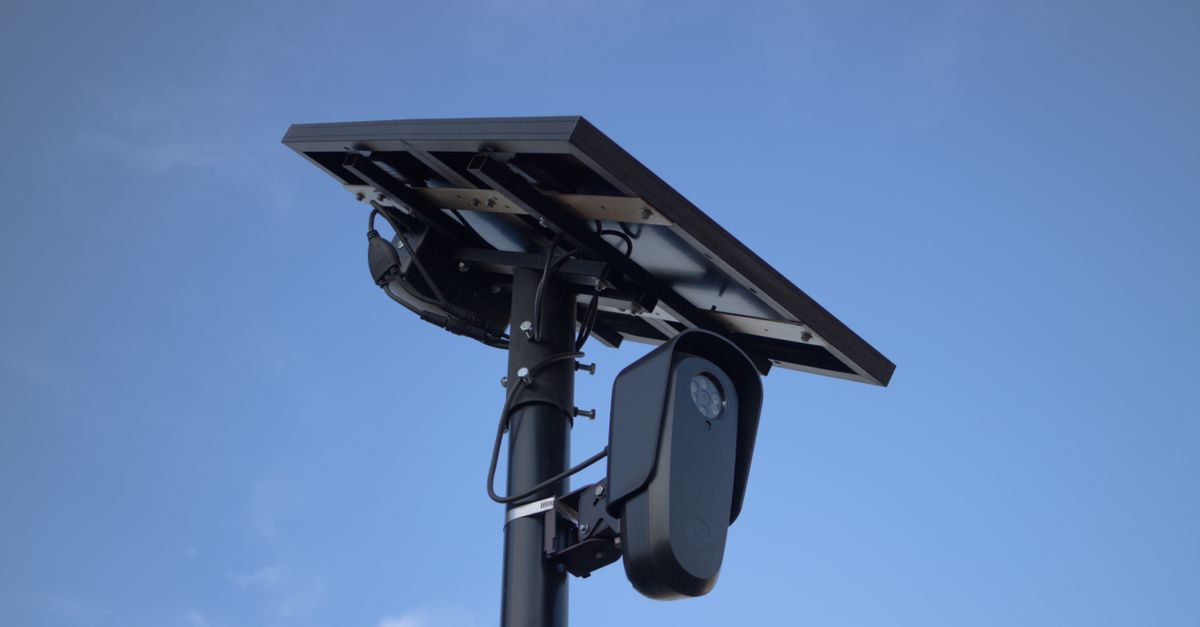
Photo by Will Freeman on Pexels
RadianX, Discovered Materials, and a teenage inventor have each launched a claim that could reshape a niche of hardware, research funding, and assistive tech. Their announcements arrive as engineers scramble for energy‑efficient devices, AI‑accelerated material discovery, and affordable communication tools.
RadianX announced a perovskite‑based solar cell that it says can keep portable devices running without conventional charging. The company argues that traditional panels cannot meet the power draw of modern gadgets, and its perovskite cells could change that calculus. Discovered Materials, a YC‑backed startup, pledged a total of $1 million—$200,000 per problem—to solve five open materials‑science challenges using its AI platform. Meanwhile, 16‑year‑old Arsh Shah Dilbagi unveiled Talk, a breath‑controlled augmentative‑and‑alternative communication (AAC) device priced under $100 and claimed to be the fastest of its class.
RadianX’s perovskite solar cells
RadianX claims its perovskite cells can generate enough power to make charging “obsolete in some cases,” according to a TechCrunch report. The startup highlights the thin‑film nature of perovskite, which allows integration onto device surfaces where conventional panels would be impractical. It cites lab‑scale efficiencies that surpass many silicon panels, but offers no field data on durability or real‑world energy yield.
The announcement raises a trade‑off that engineers must weigh: perovskite materials are known for rapid degradation under moisture and heat. Without robust encapsulation, the promised charging‑free operation may falter after weeks of use. RadianX has not disclosed a timeline for commercial products, leaving adopters to wonder whether the technology will survive beyond controlled tests.
Discovered Materials’ AI‑driven bounty
Discovered Materials launched a $1 million prize pool, allocating $200,000 to each of five unsolved materials‑science problems identified by its AI‑driven platform. The problems span high‑temperature superconductors, low‑loss dielectrics, and next‑generation battery electrolytes, as reported by TechCrunch. The startup positions the bounty as a way to crowdsource breakthroughs that could accelerate chip performance and energy efficiency.
The AI model screens candidate compounds, but the company acknowledges that experimental validation remains a bottleneck. Researchers receiving the funds will still need lab resources to synthesize and test materials, a step that can take months. Moreover, the prize structure does not guarantee that the solutions will be scalable or manufacturable at commercial volumes. The initiative therefore tests whether monetary incentives can overcome practical research constraints.
Talk: breath‑controlled AAC
Arsh Shah Dilbagi, a 16‑year‑old student from Panipat, India, built Talk, a portable AAC device that translates breath patterns into speech. The device measures pressure variations with a sensor, encodes them as a binary language, and synthesizes spoken output. According to the project page, Talk measures 10 × 6 × 2 cm, weighs as much as a smartphone, and runs for over two days on a single charge.
Talk claims a 0.8‑second response for the letter “A” and 0.4 seconds for “E,” making it the fastest AAC device on record. It offers nine voice profiles, dual operating modes, and an accuracy near 100 percent. Priced below $100, it undercuts most commercial alternatives, which often cost several hundred dollars. However, the device’s reliance on breath may limit users with respiratory impairments, and the binary encoding scheme could impose a learning curve for new adopters.
Broader implications and open questions
All three announcements highlight a tension between ambitious performance claims and real‑world constraints. Perovskite cells promise charging‑free operation but must prove longevity under everyday conditions. AI‑driven materials bounties could accelerate discovery, yet the path from computational prediction to manufacturable product remains uncertain. Breath‑controlled AAC expands accessibility but may not suit every disability profile.
What to watch: RadianX plans a field trial later this year; its results will reveal whether perovskite efficiencies survive outdoor exposure. Discovered Materials will open the first bounty round in Q2 2025, and the academic community will likely track the publication of any winning solutions. For Talk, early user feedback from speech‑disorder clinics will indicate whether the breath interface scales beyond the prototype stage. These metrics will determine whether the hype translates into durable impact.
The tech ecosystem will need to balance hype with hard data. Engineers, investors, and clinicians must scrutinize performance claims, funding models, and usability studies before these innovations reshape their respective markets.
Related Articles
AI spend spikes, safety programs
Garry Tan’s token bill, Trajectory’s $45M raise, Anthropic’s RSI warning, and OpenAI’s grid protectors illustrate the cost, funding, and safety stakes in AI.

Grok Bot email, Nvidia talks for Reflection AI
Grok Bot can now send email, Nvidia eyes Reflection AI, and a $1.25 billion monthly SpaceX compute contract surfaces, reshaping AI access and infrastructure.
AI Chip Valuations Surge as Hardware and Regulation Collide
Etched Fields draws $40B+ offers while startups roll out cheaper AI models and hardware, even as regulators and security researchers raise alarms.