

Kog Boosts GPU Inference

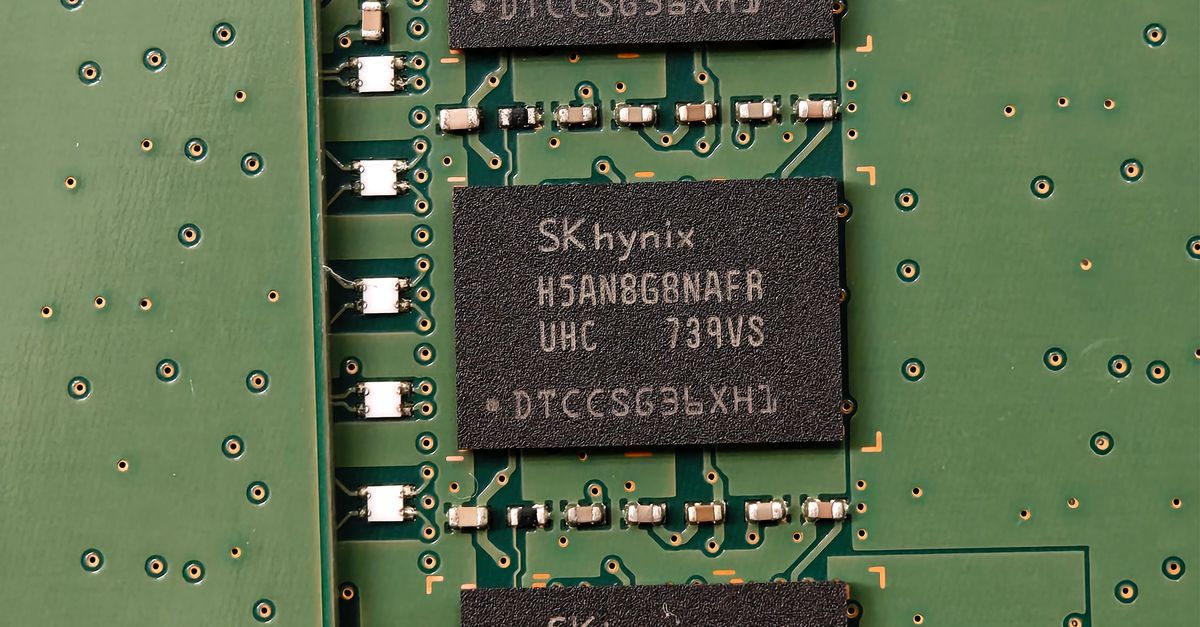
Photo by Adriano Ponte Abreu on Pexels
Introduction to Kog’s Approach
Kog, a French startup, is on a mission to prove that GPUs can be more than just a sidekick in the world of artificial intelligence. The common perception is that GPUs are poorly suited for agentic workflows, but Kog believes this is a misconception. By developing new methods to optimize GPU performance, Kog aims to squeeze more inference out of these powerful chips.
The implications of Kog’s approach are significant. If successful, it could lead to a major shift in how we utilize GPUs, making them more efficient and effective in a wider range of applications. This could have a ripple effect throughout the tech industry, from AI research to gaming and beyond. Kog’s innovative approach has the potential to challenge the status quo and open up new possibilities for GPU-based computing.
The Current State of GPU Inference
Currently, GPUs are primarily used for tasks such as graphics rendering and matrix multiplication. However, their potential for inference is largely untapped. Inference, the process of using a trained model to make predictions or decisions, is a critical component of many AI applications. By optimizing GPUs for inference, Kog hopes to unlock new levels of performance and efficiency.
The challenge lies in the fact that GPUs are designed for parallel processing, which makes them well-suited for certain types of computations. However, inference often requires a more sequential approach, which can be a bottleneck for GPU performance. Kog’s solution involves developing new algorithms and software that can take advantage of the parallel processing capabilities of GPUs while still meeting the sequential requirements of inference.
Kog’s Solution
Kog’s approach involves a combination of hardware and software optimizations. On the hardware side, Kog is working with GPU manufacturers to develop custom designs that are tailored to the needs of inference. This includes optimizing the memory hierarchy and developing new types of memory that are better suited for inference workloads.
On the software side, Kog is developing new algorithms and frameworks that can take advantage of the parallel processing capabilities of GPUs. This includes developing new types of neural network architectures that are optimized for GPU inference, as well as creating software frameworks that can manage the complex data flows required for inference.
Industry Context and History
The idea of using GPUs for inference is not new. In fact, NVIDIA, one of the leading GPU manufacturers, has been investing heavily in AI research and development for several years. However, the focus has primarily been on using GPUs for training AI models, rather than inference.
Kog’s approach is unique in that it focuses specifically on optimizing GPUs for inference. This requires a deep understanding of the underlying hardware and software architectures, as well as the specific requirements of inference workloads. By developing custom hardware and software solutions, Kog is able to unlock new levels of performance and efficiency that were previously not possible.
What to Watch
As Kog continues to develop its technology, it will be interesting to see how the company’s approach is received by the wider tech community. Will Kog’s innovative approach to GPU inference be adopted by other companies, or will it remain a niche solution? One thing is certain: if Kog is successful, it could have a major impact on the future of AI research and development. The company’s next major milestone will be the release of its custom GPU design, which is expected to happen within the next 12-18 months. This will be a key indicator of whether Kog’s approach is viable and has the potential to disrupt the status quo.
Related Articles

Laya runs offline on M4, ChatGPT tracks ads
New offline inference benchmarks, cross‑site data collection, and rescue services raise fresh questions for AI developers.
NVIDIA unveils four AI inference platforms with Ada
NVIDIA launches four specialized inference platforms featuring the L4 and H100 NVL GPUs, aiming to speed generative AI workloads across cloud and enterprise.
OpenLake cuts AI inference latency with Rust‑based KV offload
OpenLake uses a Rust storage engine to offload transformer KV caches, delivering million‑plus IOPS and 66× faster first‑token times on H100 clusters.