

Trump Pushes New Federal Spaceport Amid Tech Battles on Earth

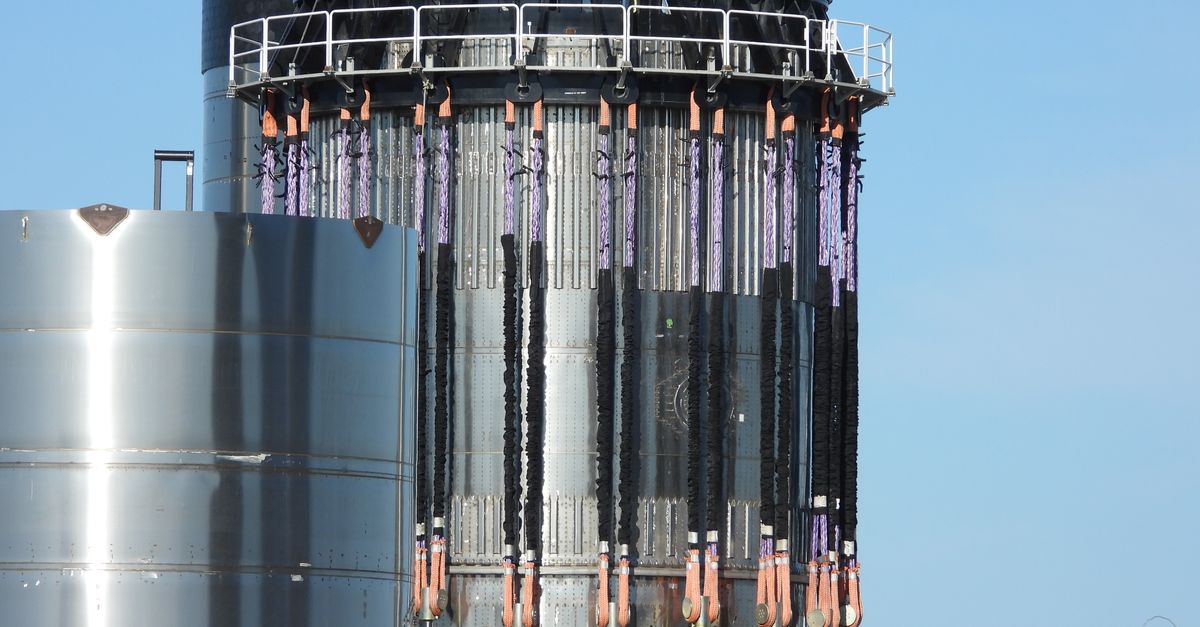
Photo by Ocean Camera Space Corp. on Pexels
The White House announced a plan for a new federal spaceport capable of heavy and super‑heavy launches. “We probably need another site that’s capable of heavy and super heavy launch capability,” President Donald Trump said in the policy brief.
The statement arrives as the United States grapples with a crowded launch market. NASA’s Artemis program already relies on a handful of sites built for the Saturn V and Space Shuttle eras. Those historic vehicles proved that only a few locations could host massive rockets. Private firms have added new pads, but they sit on leased land or commercial property. A federally owned launch complex would give the government direct control over heavy‑lift capacity. It could also serve as a bargaining chip in negotiations with commercial providers that demand favorable terms.
The push echoes the 1960s race to build launch infrastructure for the Moon. Then, the federal government poured billions into Cape Canaveral and Kennedy Space Center. The result was a permanent launch corridor that shaped the aerospace industry for decades. Today, a new site would have to accommodate both traditional expendable boosters and the next generation of reusable heavy‑lift vehicles. The policy does not name a location, but it stresses that the land must be federal, sidestepping the political friction that has slowed previous attempts to expand launch footprints.
Thunderstorms generate low‑frequency seismic waves that travel through the Earth’s crust. Researchers have learned to capture those waves with fiber‑optic cables that run alongside power lines and telecom networks. The technique turns ordinary storm activity into a passive source for imaging sub‑surface structures. It avoids the cost and environmental impact of detonating explosives for active seismic surveys.
The method can reveal hidden fault lines, aquifers, and hydrocarbon reservoirs. It also offers a continuous monitoring capability, because storms occur regularly across many regions. The approach could complement traditional seismic campaigns that require months of planning and expensive equipment. By leveraging existing fiber infrastructure, companies can lower the barrier to high‑resolution imaging.
The technology recalls the early days of oil exploration, when geologists relied on surface vibrations from trains and earthquakes. Those crude signals gave the first clues about buried formations. Modern fiber‑optic sensing refines that concept with digital precision and real‑time data streams. It may shift the balance of power toward firms that own extensive fiber networks, while forcing traditional seismic contractors to adapt or risk obsolescence.
Romanian fighter jets intercepted and destroyed a Russian‑operated drone boat near a European offshore gas platform. The strike prevented the unmanned vessel from approaching the rig complex. Several hundred rig workers were on the platform at the time, and the Romanian action averted a potential casualty.
The incident underscores the growing threat of low‑cost, autonomous maritime platforms in contested waters. Drone boats can loiter for hours, carry explosives, and evade conventional detection. By deploying air assets, Romania demonstrated that existing NATO air power can counter such threats quickly. The move also sent a clear signal to Moscow about the willingness of regional partners to protect critical energy infrastructure.
Historically, naval confrontations have often hinged on surprise and technology. During the Cold War, Operation Ivy Bells saw U.S. submarines tap Soviet undersea cables, a covert act that altered the strategic calculus of underwater surveillance. The Romanian response mirrors that pattern: a swift, technology‑driven defense that leverages air superiority to protect sea‑based assets.
Alphabet‑owned Waymo announced that it has doubled its lobbying budget in the United States. The increase targets regulators who oversee autonomous vehicle deployment. Waymo aims to clear a path for fully driverless taxi services, a market that Uber has also been courting.
The lobbying surge reflects the high stakes of the robotaxi battle. Federal agencies such as the National Highway Traffic Safety Administration and the Department of Transportation hold the keys to safety standards and deployment permits. Waymo’s spending suggests it believes regulatory approval will be the decisive factor, not just technology readiness.
Uber, by contrast, has pursued a more incremental approach, testing driver‑assisted fleets in limited cities. The divergence in strategy highlights a broader regulatory dilemma: whether to grant blanket permission for Level 5 autonomy or to require a phased rollout with human oversight. The outcome will shape the competitive landscape for years.
What to watch: Congress will soon consider a bill that could allocate federal land for a heavy‑lift spaceport, a decision that will affect NASA, the Department of Defense, and private launch firms. The Federal Trade Commission is expected to issue guidance on autonomous vehicle safety standards, a ruling that will determine whether Waymo’s vision of driverless taxis can scale. Defense ministries across NATO will review protocols for countering unmanned maritime threats after Romania’s recent strike. Finally, energy companies are testing fiber‑optic seismic arrays in pilot projects; industry adoption rates will reveal whether storm‑powered imaging can replace conventional surveys.
Each of these fronts will test how quickly policy can keep pace with rapid technological change. The next few months could redraw the map of American space launch, reshape urban mobility, and redefine security in the seas that feed Europe’s energy needs.
Related Articles
Terra's $52M Bet on Southern Defense Amid SpaceX Turbulence
Terra Industries raises $52 million to build defense infrastructure for the Global South as launch bottlenecks and geopolitical strikes reshape the sector.
Pentagon trims classification on secret space programs
DoD policy lowers secrecy on key space projects, opening tech to allies and industry as the US seeks an edge over China and Russia.
Xiaomi MiMo 2.6, Grok 4.7, and a Wave of Mid‑Month Tech Setbacks
A roundup of Xiaomi's MiMo 2.6 launch, x.ai's Grok 4.7 update, NASA's Mars Sample Return cancellation, and other mid‑September tech headlines.