

Google puts micro AI data center in orbit, tests demand‑response

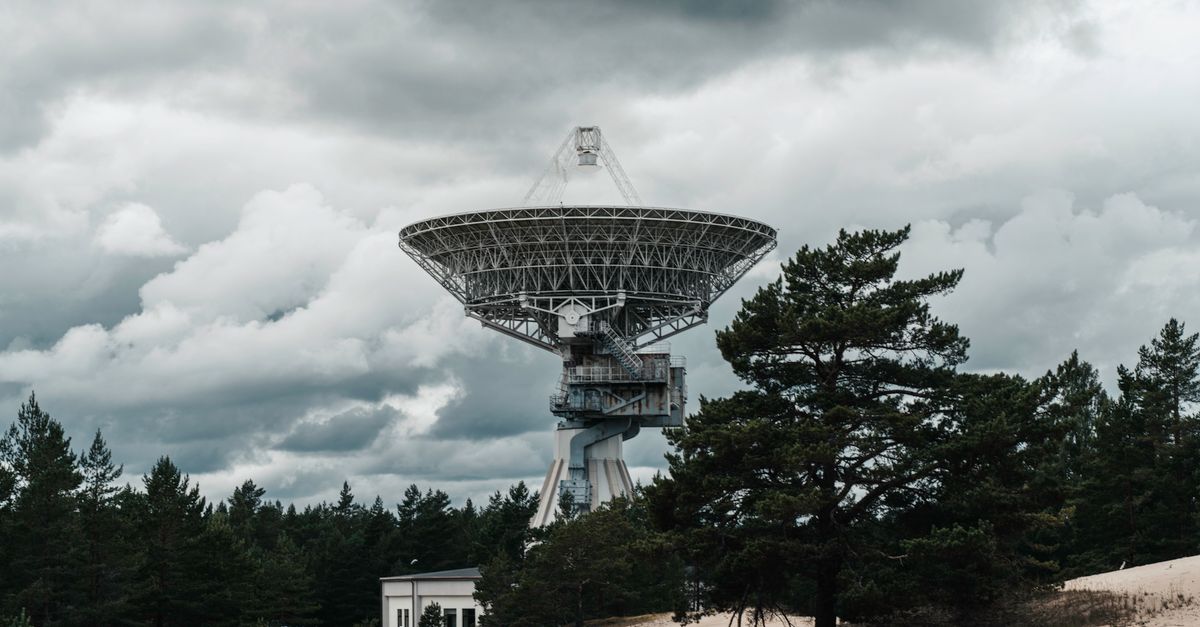
Google sent a miniature AI data center into low Earth orbit this week. The experiment will reveal whether custom AI chips survive the vacuum, radiation, and thermal swings of space.
The satellite payload carries a handful of Tensor‑flow‑optimized processors and a power‑budgeted cooling loop. Google announced that the same week it integrated a total of 1 GW of demand‑response capacity into long‑term contracts with utilities including Indiana Michigan Power, Tennessee Valley Authority, Entergy Arkansas, Minnesota Power and DTE Energy. The contracts let Google shift or curtail machine‑learning workloads to help balance the grid during peak periods.
Space‑borne hardware test
Google’s micro data center is not a commercial service. It is a testbed designed to stress‑test AI silicon in the harsh vacuum of the cosmos. The payload includes a small cluster of custom ASICs that power inference for language models. Engineers will monitor temperature, power draw, and error rates over several months.
If the chips maintain performance, the data could justify future orbital compute nodes for low‑latency edge applications such as satellite imaging or autonomous navigation. If they degrade, the result still informs thermal‑design margins for future space‑qualified AI hardware.
The experiment also serves as a public demonstration of Google’s willingness to push hardware beyond terrestrial data centers. It signals that the company sees compute as a utility that can be placed wherever latency matters, even beyond Earth’s atmosphere.
Scaling demand‑response across the grid
Google’s demand‑response program now totals 1 GW, a figure the company disclosed in a blog post. The capacity is embedded in power purchase agreements that let Google throttle a portion of its ML workloads when the grid signals stress.
Demand response works by reducing load during peak hours, which eases the need for utilities to fire up expensive peaker plants. Google’s contracts with Indiana Michigan Power, TVA, Entergy Arkansas, Minnesota Power and DTE Energy each specify how much load can be shed or shifted.
The approach is limited to sites that have sufficient on‑site storage or flexible workloads. Google acknowledges that only certain locations can participate, but the company is collaborating with regulators and groups like EPRI DCFlex to develop market rules that value such flexibility as a capacity resource.
Multi‑node inference and the Nvidia Dynamo stack
While Google tests hardware in orbit, the broader AI inference market is moving toward distributed serving. Nvidia’s Dynamo platform enables disaggregated inference across dozens of GPUs, a technique that separates prompt processing from token generation.
A recent benchmark by SemiAnalysis showed a record 1.1 million tokens per second using 72 Nvidia Blackwell Ultra GPUs. The result required a multi‑node configuration that Dynamo orchestrates, allowing each GPU to specialize in either prefill or decode phases.
Cloud providers—including AWS, Microsoft Azure, and Oracle Cloud—have integrated Dynamo into their managed Kubernetes services. This means enterprises can spin up large‑scale inference clusters without buying additional hardware, leveraging the same efficiency gains Google hopes to capture with its demand‑response flexibility.
Industry implications and next steps
Google’s orbital test and its expanded demand‑response contracts illustrate two complementary strategies: hardening AI hardware for extreme environments and making data‑center power use a grid asset. Both aim to lower the total cost of AI services, but they also expose trade‑offs.
Space hardware adds launch cost and regulatory complexity. Demand‑response reduces compute availability during critical training windows. Multi‑node inference improves throughput but adds network latency and orchestration overhead.
The industry will watch three signals. First, telemetry from the satellite will reveal whether AI chips can meet reliability targets in orbit. Second, utilities will report whether Google’s 1 GW of flexible load actually offsets peak generation needs. Third, performance data from Dynamo‑enabled clusters will show if disaggregated serving delivers consistent cost savings at scale.
What to watch: Google plans to publish the first batch of orbital performance data by Q2 2025. Utilities are scheduled to release quarterly reports on demand‑response contributions to grid stability. Nvidia’s next Dynamo release, slated for late 2024, promises tighter integration with serverless platforms, which could shift the economics of large‑scale inference once again.
Related Articles

Google adds Live AI search to Gmail for AI Pro users
Gmail’s new AI‑driven search launches for Google AI Pro subscribers, highlighting a broader split in Google’s AI subscription model.
Google pushes firmware, local Matter, and Gemini AI changes
Google tests a major firmware update for legacy Home devices, adds local Matter control for Philips Hue, and trims Gemini AI Plus access to Pro models.

Google adds agentic AI to Gemini, shifts enterprise focus
Google turns Gemini into an AI agent that can plan, execute tasks, and interface with business apps, while its CEO warns AI progress is slowing.