

Google's Orbital Chip Highlights the 1,800‑Launch Hurdle

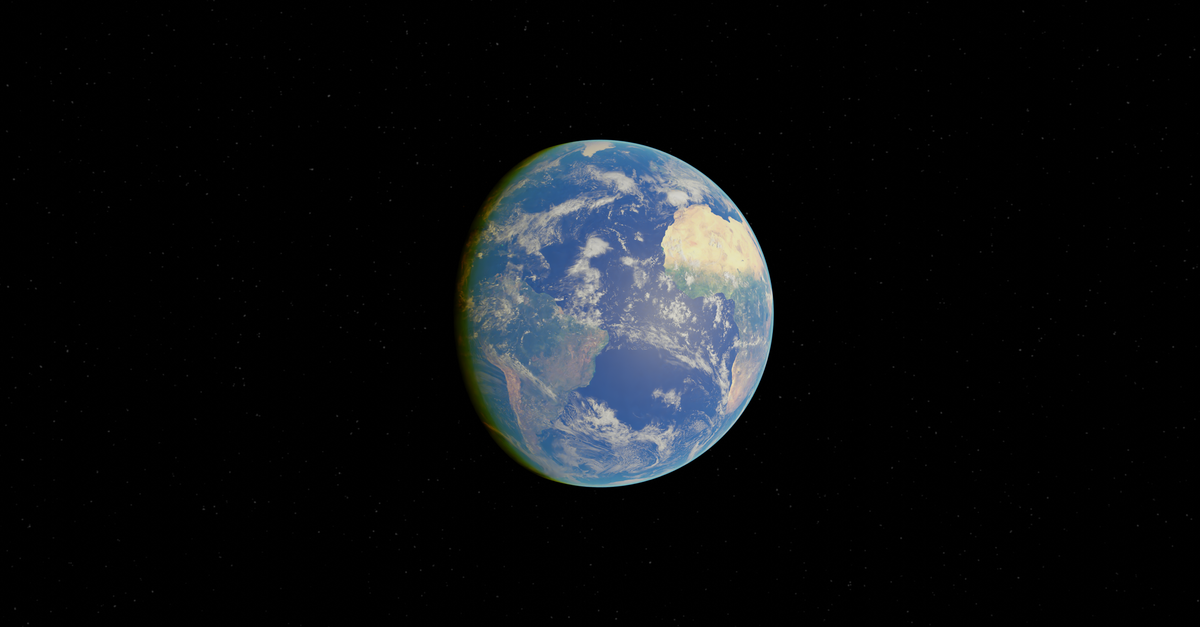
Photo by Zelch Csaba on Pexels
Google’s first advanced chip in orbit marks a concrete step toward a data‑center network above the atmosphere.
The chip rode a launch that placed it in low‑Earth orbit, and Google’s engineers have already calculated that SpaceX’s Starship will need to fly roughly 1,800 times before a full‑scale space data center becomes viable. The estimate appears in a recent briefing that pairs the orbital hardware with a long‑term vision of off‑planet compute.
The orbital chip and the 1,800‑launch calculus
Google’s payload consisted of a custom silicon accelerator designed for AI workloads. The company calls the device an “advanced chip,” and it is the first of its kind to leave Earth’s surface. By sending the silicon into orbit, Google can study thermal cycling, radiation exposure, and power budgeting in the real environment that future data farms will face.
Google’s internal model assumes that a single Starship flight can deliver enough hardware to seed a modest node. Scaling that node to the petaflop capacity required for modern AI services, the model arrives at a figure of about 1,800 Starship launches. The number is not a marketing slogan; it is a projection based on payload mass, launch cadence, and the cost of building and maintaining orbital infrastructure.
The 1,800‑flight target raises immediate questions about feasibility. SpaceX has demonstrated rapid turnaround on its Starship prototypes, but each flight still demands extensive ground operations, regulatory clearance, and a reliable supply chain. Even if Starship can achieve a weekly cadence, the timeline to reach the launch count stretches into decades.
Geothermal power as a terrestrial counterbalance
While Google looks skyward, Fervo Energy is digging deep on the ground. The company completed its first enhanced geothermal power plant in 23 months, a record speed for a project that typically takes three to five years. The plant uses a closed‑loop system that circulates fluid through hot rock without the need for traditional drilling.
Fervo’s next phases promise to connect to the grid even quicker than the inaugural plant. By standardizing modular components and leveraging prefabricated heat exchangers, the firm aims to shrink the grid‑connection window to under a year. The accelerated timeline could make geothermal a more attractive complement to intermittent renewables.
The contrast between the 1,800‑launch horizon for space data centers and the sub‑two‑year rollout of enhanced geothermal illustrates divergent approaches to scaling compute and energy. One relies on a massive launch schedule that may never materialize; the other bets on rapid, repeatable construction to deliver clean power.
Crew‑13, surgical prep, and a historic first
SpaceX’s latest crewed mission, Crew‑13, introduced an unusual pre‑flight procedure: a surgical‑style intervention on the launch vehicle’s propulsion system. The company described the work as a “precision adjustment” to address a valve anomaly detected during the final checkout. The intervention added a few hours to the countdown but was completed without delay to the launch window.
The mission also made history because Jessica Watkins became the first Black woman to lead a crewed flight into space. Watkins served as mission commander, overseeing the crew’s activities aboard the International Space Station and handling real‑time problem solving during the flight.
Watkins’ milestone underscores a broader shift in astronaut selection that values operational experience alongside scientific credentials. Her leadership on Crew‑13 offers a tangible example of how diversity can translate into mission success, a point often reduced to abstract rhetoric in press releases.
Venus’ haze decoded by cosmic dust
A new physical model of Venus’ upper atmosphere suggests that the planet’s infamous yellowish haze is not merely sulfuric acid droplets. Researchers found that iron dust, likely delivered by micrometeoroid impacts, mixes with sulfuric acid to produce the observed scattering properties. The model reproduces the haze’s spectral signature across ultraviolet and visible wavelengths.
The finding reframes Venus as a body that continuously ingests interplanetary material, integrating it into its climate system. Iron particles act as nucleation sites, altering cloud formation and potentially influencing the planet’s heat transport. This insight could inform future probe designs that need to survive or sample the harsh haze layer.
Understanding the haze’s composition also feeds back into Earth‑centric climate studies. If extraterrestrial dust can modulate atmospheric optics on Venus, similar processes might have played a role in Earth’s early atmosphere, offering a comparative angle for planetary scientists.
What to watch next
Google will publish a detailed white paper on the thermal and radiation performance of its orbital chip later this quarter, a document that could refine the 1,800‑launch estimate. SpaceX’s Starship flight schedule, especially any increase in weekly launches, will be the next concrete metric to gauge progress toward a space‑based data fabric. Meanwhile, Fervo’s upcoming plant, slated for grid connection in early 2025, will test whether the accelerated geothermal model can be replicated at scale. Finally, the Venus dust model will be validated by the upcoming DAVINCI+ mission, which plans to sample the upper atmosphere on its 2029 trajectory.
Stakeholders should track these four data points: Google’s chip performance report, Starship’s launch cadence, Fervo’s grid‑connection timeline, and DAVINCI+’s atmospheric measurements. Together they will shape whether Earth‑centric power and compute strategies or ambitious space‑based architectures will dominate the next decade of tech infrastructure.
Related Articles
Europe Goes Solo on Venus Mission as NASA Shifts Funding Focus
NASA pulls a radar instrument, prompting Europe to pursue its Venus probe alone while the agency asks states for money.
Cowboy Space Hits Rocket Shortage Roadblock
Cowboy Space raises $275 million for orbital data centers, but faces hurdles in building rockets for launch.
Tesla’s Roadster revamp aims to fund Model 3 woes
Tesla unveiled a $200k Roadster with a $250k Founder Series, but the move masks shaky Model 3 production and cash burn.