

Tesla Enables Emergency Drive-Off During Supercharging

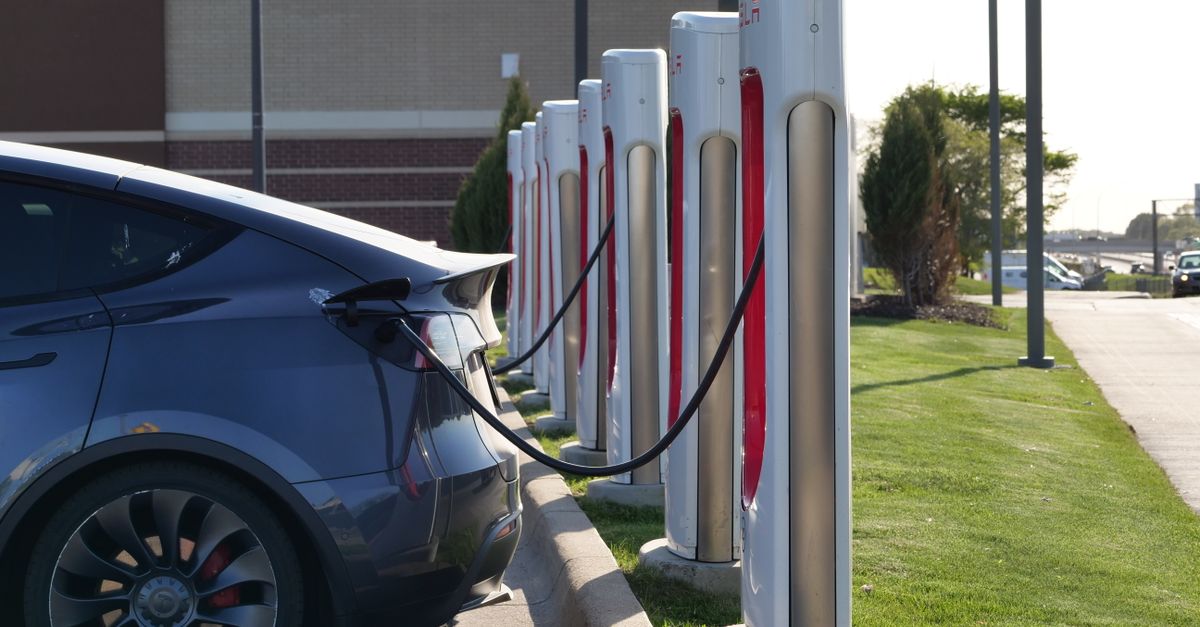
Photo by Giant Asparagus on Pexels
Tesla vehicles can now drive away from Supercharger stations even if the charging cable remains connected. This new software feature directly responds to a mass shooting at a Twin Falls, Idaho, Supercharger location in August, where four people died and seven were wounded. Prior to this update, Tesla vehicles locked the charging plug, disabling drive functionality until the cable was manually released. This immobilizing safeguard, while designed for routine operation, became a critical impediment when faced with an immediate, extreme threat.
The August incident underscored a critical vulnerability in the charging protocol. Drivers faced a situation where they could not immediately move their vehicles to escape a life-threatening scenario, highlighting the need for an override to the existing security measures.
The Paradox of Connection
For years, the Supercharger system’s design prioritized a secure electrical and physical connection. The charging cable would lock firmly into the vehicle’s port, a mechanism intended to prevent accidental disconnections, deter theft of expensive charging hardware, and ensure a stable power flow. This triple imperative drove the engineering decision to create a robust, almost inseparable link between the vehicle and its power source. Users relied on this certainty for uninterrupted charging cycles. Disconnecting required a deliberate action, either initiated from the vehicle’s interface or directly at the charger, before the cable could be physically removed.
This secure connection, while functionally robust, presented a paradox: a vehicle designed for instantaneous motion was temporarily immobilized. Drivers, accustomed to immediate mobility, found themselves tethered, unable to respond rapidly to external circumstances. In routine charging, this immobility was a negligible detail, a brief pause in a daily routine. However, the Twin Falls shooting exposed how this security feature, in an extreme context, could transform into a dangerous impediment to personal safety. The incident revealed a fundamental need for drivers to retain agency, even during a charging session.
The Mechanics of Charging Lockouts
The initial design of most EV charging systems incorporates a multi-layered locking mechanism. Physically, a solenoid-actuated pin extends from the charging port, securing the cable in place once a connection is established. This physical lock is often paired with software protocols that signal the vehicle’s onboard computer about the charging status. When the cable is locked and actively charging, the vehicle’s drive system is typically disengaged, preventing any accidental or unauthorized movement. This design prioritizes the integrity of the electrical connection, safeguarding the expensive charging equipment from accidental damage if a driver were to inadvertently attempt to drive away. It also ensures consistent power delivery, which is crucial for efficient battery conditioning and charging cycles. The pre-update system ensured a deliberate process: drivers had to explicitly command the vehicle to release the lock, typically via the touchscreen or a button on the charging cable itself, before the vehicle’s drive capabilities were restored. Tesla’s new software update circumvents this established protocol. It enables the vehicle to override the software interlock, even if the physical pin remains engaged, allowing the car to move and break the physical connection by force. This redefines the fundamental interaction between the vehicle’s operating system and its charging hardware.
A Swift Software Intervention
The mass shooting at the Twin Falls Supercharger brought the security versus safety dilemma into sharp focus. A routine stop for electric vehicle owners transformed into a site of violence, leaving Tesla owners to question the safety protocols of public charging infrastructure. The existing requirement for a manual cable release before the car could be driven became a glaring and dangerous constraint in a life-threatening emergency.
Tesla addressed this issue through a new over-the-air (OTA) software update. This update allows drivers to put the car in drive even if the Supercharger cable is still connected and locked. The vehicle will then move away from the charger with the cable still attached. This capability directly prioritizes immediate driver escape over the integrity of the connection or the cable itself. The implementation through software highlights the agility of modern vehicle architecture, enabling rapid adaptation to unforeseen real-world dangers without requiring physical recalls or hardware modifications. Traditional automotive responses to such safety issues often entail lengthy investigations, hardware redesigns, and costly physical recalls. Tesla’s over-the-air update capability allowed for an immediate fleet-wide deployment, demonstrating the strategic advantage of its integrated software platform in addressing emergent safety challenges. The update signifies a direct and swift response to a critical real-world safety concern.
The Broader Landscape of Charging Security
Tesla’s action reverberates across the entire electric vehicle charging ecosystem. The need for a secure connection is universal across charging standards. Competing standards like the Combined Charging System (CCS) and the widely adopted J1772 connector, which preceded Tesla’s proprietary connector in North America (now known as NACS for other manufacturers), also incorporate robust locking mechanisms. These systems similarly prevent accidental disconnections and deter theft, embedding a default state of immobilization during charging. Public charging stations, regardless of connector type, present unique safety considerations. Often located in commercial parking lots, service stations, or sometimes more isolated areas, these sites can inadvertently create environments where occupants feel exposed. The act of charging, by its nature, requires a period of stationary waiting, which can heighten a driver’s sense of vulnerability, especially during off-peak hours or in less populated locations. Tesla’s emergency drive-off feature directly addresses this latent anxiety, forcing a re-evaluation of how all manufacturers and charging network operators balance the technical demands of a secure charge with the critical human need for immediate escape.
Evolving Standards for EV Security
This update forces a re-evaluation of design priorities within the electric vehicle industry, particularly concerning public charging. Conventional engineering wisdom often prioritizes physical security for both expensive charging equipment and to guarantee a stable power supply. However, the Twin Falls incident demonstrated that occupant safety must, at times, supersede equipment security. This paradigm shift acknowledges that in rare but critical circumstances, the loss or damage of a charging cable or port is a justifiable trade-off for protecting human life. It elevates the driver’s ability to act decisively above the integrity of infrastructure components. The ability for a vehicle to drive away while still connected redefines the implicit contract between a driver and their charging infrastructure.
Tesla’s decision to deploy a software-based solution, rather than a more complex hardware change, underscores the power and flexibility of contemporary vehicle platforms. This rapid deployment capability allows for critical safety features to be pushed out to the entire fleet swiftly, directly addressing urgent problems. It also illustrates the significant control the software layer holds over a vehicle’s fundamental operations, including the ability to depart a charging station under duress. This shift suggests that charging is no longer a passive act of immobility; the vehicle maintains an active state of readiness, empowering occupants with an immediate escape option.
Industry Implications
Moving forward, the focus will be on the real-world implications and long-term consequences of this feature. How frequently, if ever, will this emergency drive-away be activated? Will there be any unintended side effects, such as accidental activations or damage to charging equipment? Manufacturers will need to assess the durability of charging ports and cables under such stress. Moreover, the feature introduces a new dimension of liability concerning potential property damage at charging stations. This update sets a new precedent for safety features within the broader EV industry, potentially prompting other manufacturers to re-evaluate their own charging lock mechanisms and emergency protocols.
The industry will observe if this emergency drive-away capability becomes a standard, expected feature for all electric vehicles, potentially leading to new regulatory mandates or industry best practices. The conversation has shifted beyond purely technical efficiency to a more holistic view of driver security in complex public environments. This move by Tesla could spur a wider re-examination of charging station design, public safety measures, and the capabilities embedded in future EV software across the entire sector. It underscores that innovation in EV technology now extends beyond range and charging speed, encompassing comprehensive driver and occupant safety in all conceivable scenarios.
Related Articles


Tesla Considers China Exit Amid Geopolitical Tensions
Tesla may sell China business due to US-China tensions

Tech Roundup: Kodiak AI Funding, Tesla Safety Benchmark, and More
Kodiak AI raises $100M at a discount, Tesla Model Y meets new safety benchmark, and Google Health app drops Fitbit features.