

HD Supernova Image Reveals Star’s Survival Secrets

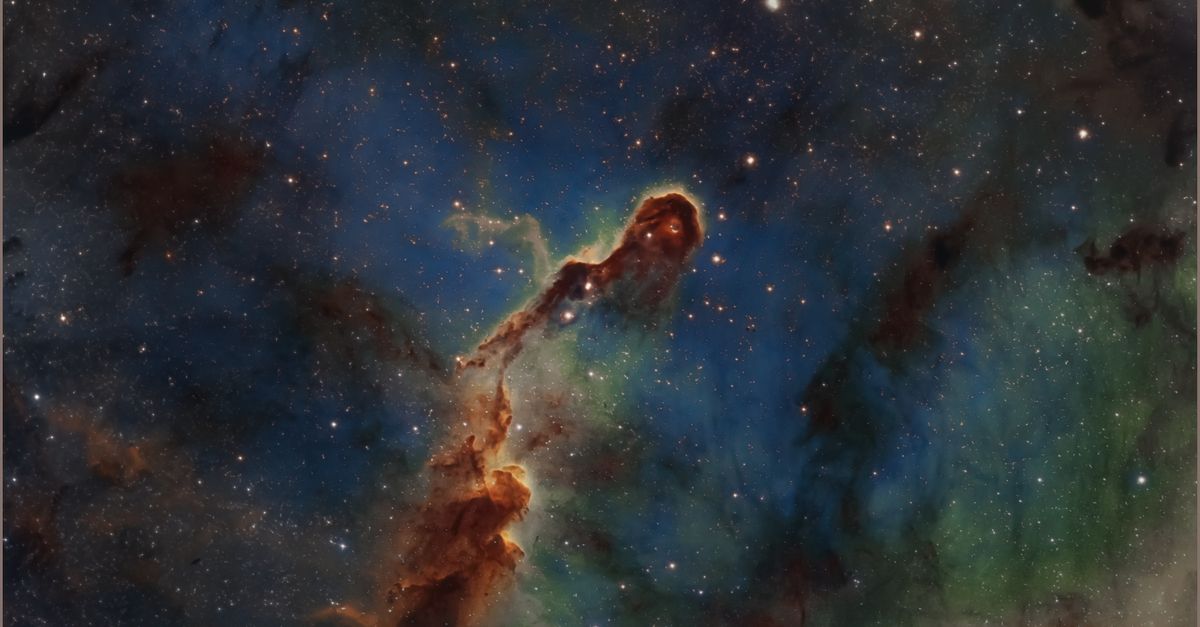
Photo by Robert Gruszecki on Pexels
A millennium‑old explosion captured in unprecedented detail
A supernova that lit the sky roughly a thousand years ago now appears in high definition, thanks to a reconstruction that stitches together archival photographs and modern processing. WIRED reported that the image not only dazzles but also hints at how the progenitor star survived the blast that should have obliterated it.
The reconstruction overlays data from ground‑based observatories with space‑telescope scans, revealing faint filaments that escaped earlier surveys. Those filaments trace a shock front that appears unusually intact, a condition scientists link to a dense circumstellar shell the star expelled before exploding. The shell, the report suggests, may have cushioned the blast, allowing the core to persist as a compact remnant.
Imaging the brain under psychedelics: new windows on consciousness
A separate study published by Ars Technica described participants meditating inside an MRI scanner while receiving psilocybin, the active compound in magic mushrooms. The design paired each subject’s brain scan with a control session without the drug, allowing a direct visual comparison of neural activity.
The MRI data showed amplified connectivity in regions associated with self‑referential thought during the psilocybin condition. Researchers interpreted the pattern as a neural correlate of the altered sense of unity reported by participants. The study’s authors argue that high‑resolution functional imaging can map the brain’s response to psychoactive agents more precisely than behavioral surveys alone.
When stone preserves wood: Neanderthal tools emerge from rock
Ars Technica also covered a discovery in Spain where wooden implements fashioned by Neanderthals survived millennia encased in stone. The preservation occurred because mineral‑rich water dissolved surrounding rock, then precipitated a hard shell that locked the tools in place before the matrix eventually decayed.
The find provides a rare glimpse into the daily lives of Neanderthals, whose organic artifacts usually vanish. The wooden tools, still recognizable after tens of thousands of years, confirm that the hominins engaged in woodworking activities previously inferred only from indirect evidence. The article notes that the mineralization process offers a new preservation pathway for other fragile archaeological materials.
Lava’s slow swell before the roar: Hawaii’s expanding ground
In a report on Hawaiian volcanism, Ars Technica explained that the ground beneath Kīlauea expanded by roughly half a meter each day before the onset of spectacular lava fountains. The uplift measured by GPS stations signaled magma accumulation in the shallow conduit.
When the pressure reached a critical threshold, the magma breached the surface, producing the observed fountains. The gradual swelling gave scientists a measurable precursor, allowing authorities to issue timely warnings. The article emphasizes that monitoring ground deformation remains a cornerstone of volcanic hazard mitigation.
Cross‑disciplinary pressure on imaging: why resolution matters now
The supernova reconstruction, the psychedelic MRI, the stone‑encased tools, and the volcanic uplift all share a reliance on ever‑sharper imaging. In the 1960s, the Apollo program’s televised lunar landings forced engineers to develop cameras capable of surviving vacuum and radiation. Those advances seeded commercial sensor technology that later powered Earth observation satellites.
Similarly, the 1996 Telecom Act opened the door for broadband infrastructure, which in turn enabled the high‑throughput data pipelines needed for modern scientific imaging. Today’s high‑definition astrophotography leverages the same data‑compression algorithms that power real‑time MRI reconstructions. The convergence of these histories underscores a pattern: breakthroughs in one domain cascade into others, often reshaping how researchers interpret raw signals.
The Hawaiian case illustrates that improved ground‑deformation imaging can translate directly into public safety. When GPS arrays deliver centimeter‑level precision, emergency managers can act on trends that would have been invisible a decade ago. The same principle applies to archaeology; micro‑CT scans now reveal tool edges hidden within mineral matrices, expanding the catalog of known Neanderthal behaviors.
What to watch
Investors and policymakers should track funding decisions for next‑generation sensor arrays, especially those that promise sub‑millimeter resolution across wavelengths. The upcoming launch of a space‑based interferometer, slated for 2028, could sharpen supernova reconstructions further, while the National Institutes of Health’s budget request for advanced neuroimaging platforms will dictate the pace of psychedelic research. In Hawaii, the state’s allocation for expanded GPS networks will determine whether ground‑uplift warnings stay ahead of eruptive events. The next few years will reveal whether the scientific community can translate higher resolution into actionable insight, or let the data remain a dazzling curiosity.
Related Articles
Skydance merger reshapes CNN; exoplanet and prediction markets
Paramount completes a $110 billion deal with Warner Bros. Discovery, keeping CNN's CEO, while astronomers spot the youngest exoplanet and a new prediction market debuts.

New Labs, Maps, Crowdfunding and AI Boost Biological Research
Scientists use ultraquiet chambers, complete fly brain maps, a crowdfunding platform, and upgraded AI reasoning to accelerate biology research.
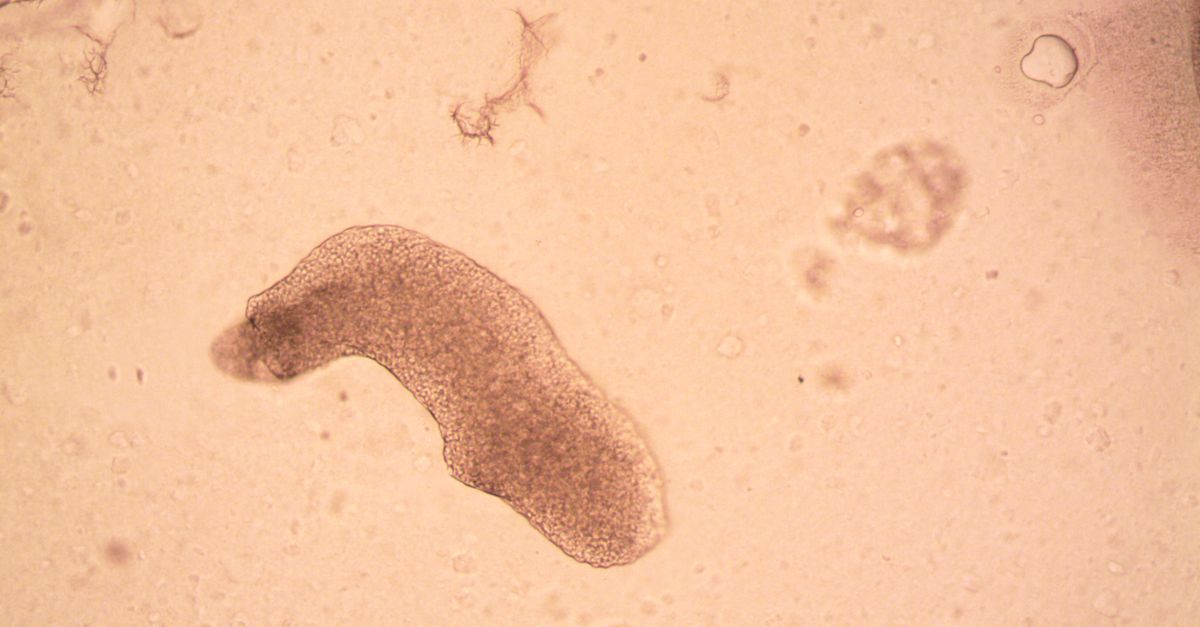
Human Brain Organoids Form Eyes and Power Early Wetware Computers
Lab-grown mini-brains now grow rudimentary eyes and serve as living processors, sparking technical hurdles and ethical debate.