

Porsche EV, Projector, Smart Glasses: Tech Shifts in 2026

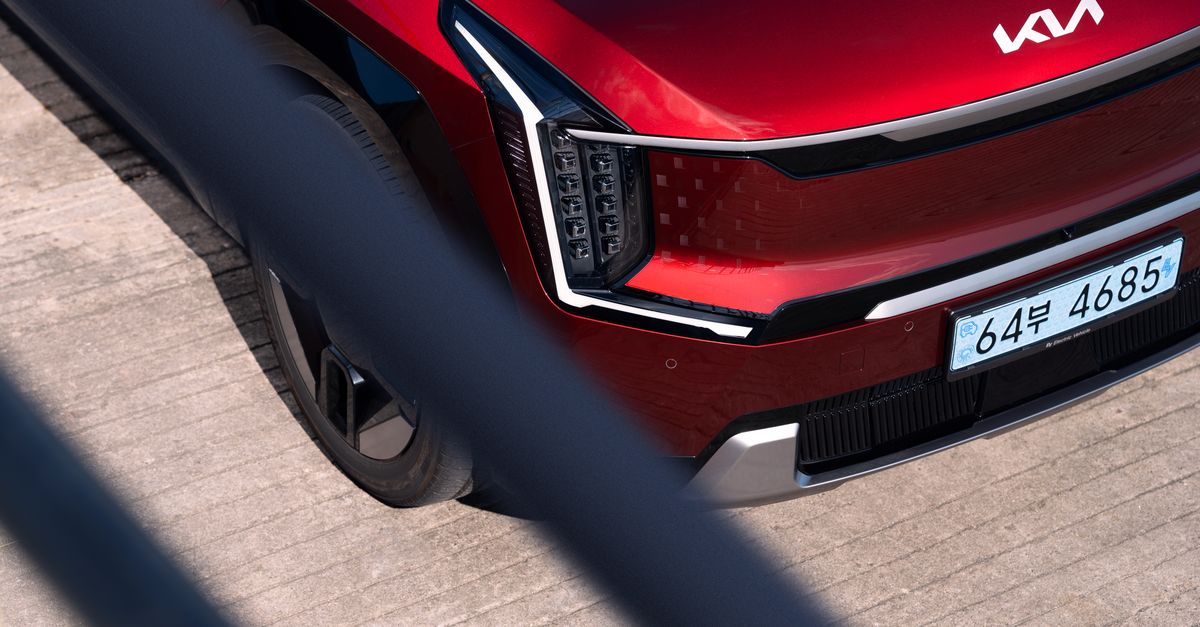
Photo by Hyundai Motor Group on Pexels
Porsche unveiled the 2026 Macan Turbo EV, a two‑row crossover that delivers 630 horsepower from a 100 kWh battery. Its raw performance forces luxury brands to reconcile electrification with the driving dynamics that define their heritage.
The Macan Turbo EV arrives as a 2026 model year, slotting into Porsche’s existing Macan lineup while swapping the internal‑combustion V6 for a massive battery pack. The 100‑kilowatt‑hour cell provides enough energy for a respectable range, but the 630‑hp output pushes the vehicle into supercar territory, raising questions about weight, efficiency, and the brand’s ability to keep the driving feel Porsche fans expect.
A projector that threatens the cinema business
AWOL Vision’s Aetherion Max RGB Laser UST projector claims top performance in both dark rooms and bright sunshine, a rarity for home‑theater gear. Reviewers note that its brightness lets it compete with dedicated cinema screens, effectively giving movie theaters a run for their money.
The projector’s laser‑based RGB engine sidesteps the wash‑out typical of traditional lamps, delivering deep blacks and vivid colors even when ambient light floods the room. For consumers, that means a living‑room experience that rivals a commercial theater, while theaters face a new competitor that can bring comparable image quality to a fraction of the cost.
Ray‑Ban Meta glasses fix a privacy bug, but concerns linger
A software bug that exposed user data in Ray‑Ban Meta smart glasses has been patched, according to the latest report. The fix stops the immediate leak, yet privacy advocates warn that the underlying architecture still gives manufacturers ample access to personal information.
The glasses integrate Meta’s AR platform, meaning video feeds, location data, and voice recordings flow through Meta’s cloud services. Even with the bug closed, the broader question remains: how much data will be harvested in everyday use, and what safeguards are in place to prevent future abuses?
Meta’s new commercial TOS: an AI licensing loophole?
Meta announced a “streamlined” commercial Terms of Service that reshapes how the company charges developers for AI‑powered features. Legal analysts argue the rewrite is designed to sidestep millions of dollars in licensing fees that would otherwise go to third‑party AI providers.
If the interpretation holds, Meta could offer its own generative models under the new TOS, effectively monopolizing the AI stack for commercial partners. Critics label the move an “AI power grab,” warning that it could tilt the market toward a single dominant player and stifle competition.
Surface Laptop Ultra lives up to most promises
Microsoft’s Surface Laptop Ultra aims to be a one‑stop device for developers, AI workloads, and gaming. Early hands‑on impressions confirm that the machine delivers on the majority of those claims, balancing a high‑refresh display with a capable GPU and enough RAM for intensive coding sessions.
The laptop’s design packs a detachable screen and a robust cooling system, allowing developers to run local AI inference while still enjoying smooth frame rates in modern games. It falls short only in battery longevity under sustained heavy loads, a trade‑off many power users accept for the raw capability.
Android on a laptop is still a work in progress
Google’s recent “Googlebook” experiment shows Android running on a laptop chassis, proving the concept is technically viable. Reviewers, however, point out that the experience feels more like a large tablet than a true desktop OS.
The device boots quickly and supports touch and pen input, but the lack of a mature window manager and limited peripheral support make it unsuitable for professional workflows. Google has a clear path forward, but the platform needs substantial software refinements before it can compete with Windows or macOS laptops.
What to watch next
Porsche will reveal real‑world range figures for the Macan Turbo EV at the upcoming auto show, a data point that will test whether 630 hp can coexist with practical daily use. Meanwhile, Meta’s commercial TOS is slated for final approval by its legal team later this quarter, a decision that could reshape AI licensing across the industry. Finally, the next iteration of Android laptops is expected to land in early 2027, and its reception will signal whether Google can turn a niche experiment into a mainstream alternative.
Related Articles
Lucid cuts output as EV market stalls, VC focus shifts
Lucid Motors trims production amid weak demand, while venture capital eyes new bets and AI tools reshape founder‑investor matchmaking.
Mac Mini scarcity, AI vending drama, and unexpected EV sales
A look at Mac Mini shortages, top Ethernet switches, a ruthless AI vending test, Ferrari’s EV sales surge, and recent corporate lawsuits.
DeepSeek V4.1 Flash 1017 Cuts Cost While Doubling Token Window
DeepSeek releases V4.1 Flash 1017 with a 1M token window, lower pricing and faster outputs, reshaping AI coding assistants.