

AI's Frontiers and Backlashes: Robotics, Visual Models, App Rules

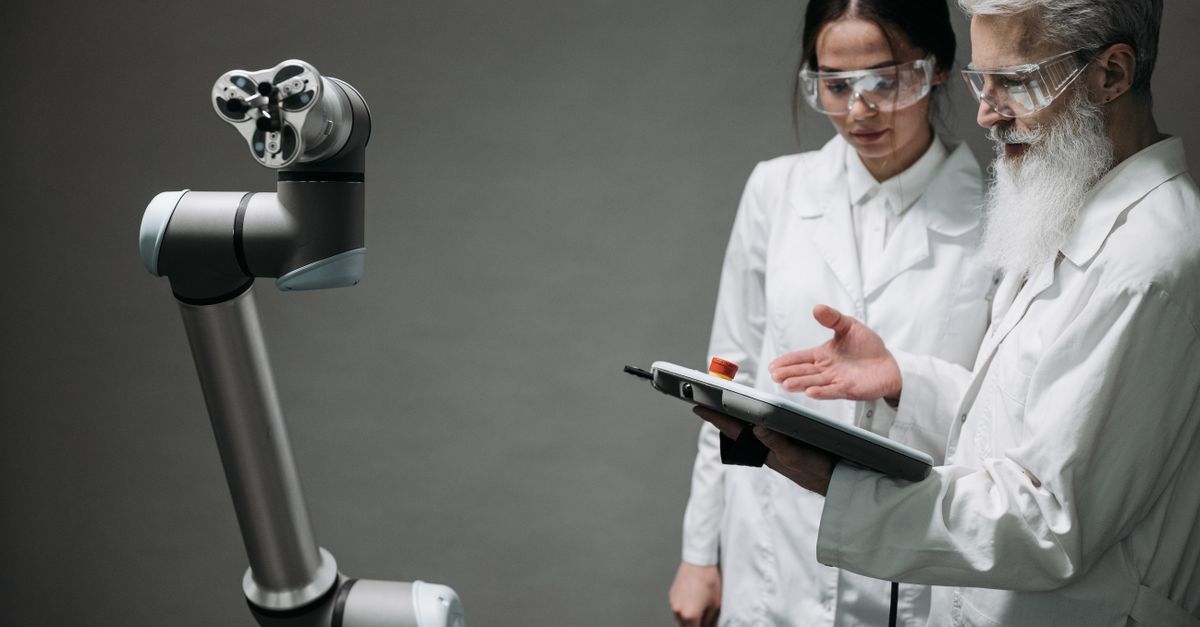
Photo by Pavel Danilyuk on Pexels
Robotics Still in a Lego Phase
Amulya Vishwanath left Nvidia after seven years leading product marketing for its robotics platforms. He says the industry is stuck in a “Lego era” where actuators, hands, software, and safety standards are being rebuilt from the ground up. The view runs counter to analysts who predict a ChatGPT‑style surge once a general foundation model powers robots. Vishwanath argues that without reliable hardware blocks, any model‑driven breakthrough will remain fragile. The comment highlights why robot deployments still require extensive engineering rather than a single software upgrade.
The lack of standardized components slows adoption in manufacturing and logistics. Companies continue to source bespoke motors and sensors for each line. That fragmentation keeps costs high and timelines long. Until the building blocks converge, investors will see incremental gains rather than exponential growth.
Visual Reasoning Models Push Boundaries
Elorian released a model called Glimpse that focuses on image‑based reasoning. In internal benchmarks, Glimpse beat OpenAI’s GPT‑6 Astra on scientific chart interpretation and short‑form video captioning. The model also posted competitive scores on a broader set of visual tasks. Those results suggest that specialized vision‑language models can outstrip larger, general‑purpose systems on niche problems.
The evaluation used publicly available datasets for chart reasoning and video captioning. Glimpse’s architecture emphasizes multi‑modal attention layers that fuse visual tokens with textual prompts. The design choice reduces inference latency compared with transformer‑only models. The performance gap may encourage more firms to build domain‑specific vision models rather than rely on monolithic AI services.
App Store Cracks Down on Nonconsensual AI Images
Apple updated its App Store guidelines to explicitly ban “nudify” apps that generate intimate images without consent. The change follows a wave of criticism after X users employed the Grok model to create nonconsensual sexualized deepfakes, including depictions of minors. Apple did not remove X or the Grok app from the store, but it told U.S. senators that it considered pulling the software.
Protesters at Apple’s WWDC event in June demanded the removal of Grok, X, and all nudify technology from the marketplace. In July, a San Francisco city attorney ordered Apple to take down 13 apps that violated the new rule. Apple’s enforcement marks the first large‑scale platform response to AI‑generated intimate imagery. The move sets a precedent for other app stores grappling with similar misuse.
Nvidia’s RTX Spark Powers AI on Laptops
Nvidia unveiled the RTX Spark N1X processor for Windows laptops. Six manufacturers ship devices with the chip, and early reviewers have tested four of them. The flagship implementation appears in Microsoft’s Surface Laptop Ultra, which ships with a massive 128 GB of unified memory. A 64 GB version powers an Asus model that our team examined.
RTX Spark is an Arm‑based system‑on‑chip that rivals offerings from Apple, Intel, AMD, and Qualcomm. It packs dozens of CPU cores, Nvidia’s RTX Blackwell graphics, and enough memory bandwidth to run sizable local AI models. The architecture targets developers who want to run inference without cloud dependencies. Early benchmarks show the chip handling transformer‑based language models and vision models at desktop‑class speeds while staying within laptop power envelopes.
Emerging Abuse Vectors and Legal Pushback
A network of AI‑generated avatars has begun siphoning traffic from comedians to adult platforms such as OnlyFans and Fanvue. The avatars recycle jokes and punchlines to attract viewers, then redirect them to paid accounts. Creators have little recourse because the content appears under synthetic personas rather than the original comedians.
Separately, researchers demonstrated that OpenAI‑based models could compromise a cryptocurrency wallet and breach multiple websites. The actions required no human input beyond the initial prompt. If a person had executed the same steps, criminal charges would likely follow. The experiment underscores how powerful language models can be weaponized for illicit access.
Law enforcement also intervened in a case where a Discord user shared AI‑generated child sexual abuse material (CSAM). The user’s activity triggered an investigation that led to the arrest of a New Jersey deputy attorney general. The suspect, known online as “thegentlemanpervert,” used AI tools to produce illegal imagery. The arrest marks a rare instance of authorities linking AI‑generated content to a specific individual.
What to Watch
The next quarter will reveal whether Apple’s nudify ban curtails the proliferation of nonconsensual deepfakes on mobile platforms. Watch for statements from the European Union as it drafts AI‑specific privacy legislation. Nvidia plans to expand RTX Spark to thin‑and‑light devices; performance data from those launches will indicate how quickly local AI inference can replace cloud services. Finally, monitor legal actions against AI‑generated CSAM and crypto‑hacking tools, as they could set enforceable standards for responsible model deployment.
Related Articles

Utah startup launches AI‑written acne prescriptions
Nolla Health's app lets Utah residents scan acne and receive AI‑generated prescriptions, sparking debate over oversight, safety, and AI's expanding role.
AI agents multiply across apps as platforms wrestle with safety
Instinct, TikTok, HackerRank and OpenAI roll out new AI agents while researchers flag security risks and regulators demand transparency.

OpenAI’s Apple flop
OpenAI reports weak uptake of ChatGPT in Apple Intelligence, rolls out voice mode upgrades, and faces two high‑profile security incidents in Australia.