

Starlink's Fragile Role in Ukraine, Iran and Remote America


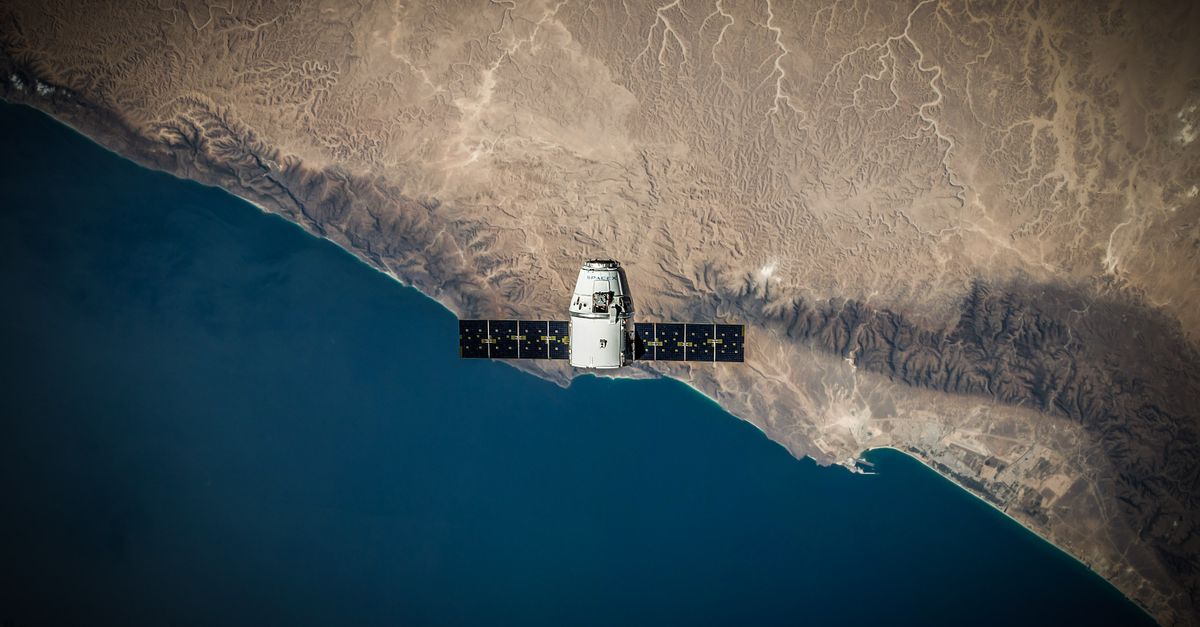
Photo by Igor Mashkov on Pexels
Ukraine’s Uncertain Bandwidth
On the night of May 30, 2025, Ukrainian frontline units reported a sudden loss of high‑resolution video feeds as their Starlink terminals dimmed. The outage coincided with a report that Elon Musk ordered SpaceX to throttle the country’s access.12
TechCrunch cited the throttling order, while Ars Technica noted that Kyiv has already begun re‑engineering drone control loops and artillery coordination to run without the service.3 The shift reflects a hard‑won lesson: dependence on a privately controlled constellation can be weaponized in real time.4
The Ukrainian military now runs parallel data paths, using a mix of legacy satellite links, mobile mesh networks and on‑board processing. Those redundancies cost time and money, but they also restore a degree of autonomy that the Musk‑driven throttling threatened to erase.
Iran’s Threats and the Weaponization of Space
State media in Tehran announced plans to treat all SpaceX and Starlink assets in the Middle East as military targets. The Fars News Agency listed facilities in Iran, Israel and other Arab states among its draft target list.5678
The declaration follows a U.S. State Department purchase of nearly 6,000 Starlink terminals in January, a move the Wall Street Journal linked to anti‑regime activists circumventing nationwide internet blackouts. Iranian officials warned that any use of the devices inside the country now carries up to two years in prison.
If Tehran follows through, the conflict will echo the 1973 oil shock, when a single geopolitical lever disrupted global supply chains. In this case, the lever is a constellation of low‑orbit satellites that power civilian and military communications alike.
Remote Tribes and the Promise of Satellite Broadband
On a Wednesday in early June, the Hoh tribe of Washington state posted a video showing children joining remote‑learning sessions over Starlink. Tribal officials described the experience as a leap from sub‑kilobit speeds—0.3 to 0.7 Mbps—to broadband that rivals urban fiber.
SpaceX advertises download rates of up to 100 Mbps and latency under 30 ms for its current fleet of more than 700 low‑orbit satellites. The tribe has not disclosed exact speeds, but the visual evidence suggests a transformative jump for a community that has “paddled up river with a spoon” for eight years.
The Hoh story contrasts sharply with the geopolitical pressure points in Ukraine and Iran. It shows how the same technology can empower a remote reservation while simultaneously becoming a bargaining chip in state‑level power plays.
The Policy Crossroads: Privatization vs Nationalization
The clash between President Donald Trump and Elon Musk in the Oval Office on May 30, 2025, underscored how deeply intertwined SpaceX is with U.S. foreign policy.12 A commentator on Hacker News argued that the episode proves the absurdity of entrusting vital satellite infrastructure to a single oligarch.
That argument revives the 1996 Telecom Act debate, when lawmakers wrestled with whether to break up monopolies that controlled essential communications. The current dilemma asks whether the United States should nationalize SpaceX, or at least impose stricter oversight, before another throttling order or foreign strike disrupts a nation’s lifeline.
What to watch: the Federal Communications Commission’s pending review of SpaceX’s licensing, the Ukrainian Ministry of Defense’s rollout of alternative communication architectures, and any formal Iranian declaration of intent against Starlink facilities. Each decision will reveal whether the satellite internet market remains a private playground or becomes a regulated public utility.
Footnotes
Related Articles

Starlink spectrum, Let's Encrypt certs, Amazon VPC upgrades
Starlink secures 800 MHz spectrum for indoor mobile, Let's Encrypt cuts SSL cert lifetimes to 64 days, and Amazon opens VPC to direct internet access.
Data Centers Under Fire: Power, Hackers, and War
SpaceX’s new plant, a Kremlin‑backed Exchange hack, and Iranian strikes expose the fragile foundations of today’s cloud infrastructure.

FAA Clears New Glenn for 4th Launch
Blue Origin's New Glenn gets FAA clearance for its fourth flight as debris concerns grow and satellite internet readies to power more inflight Wi‑Fi by 2027.