

AI expands its foothold from EVs to home security and defense

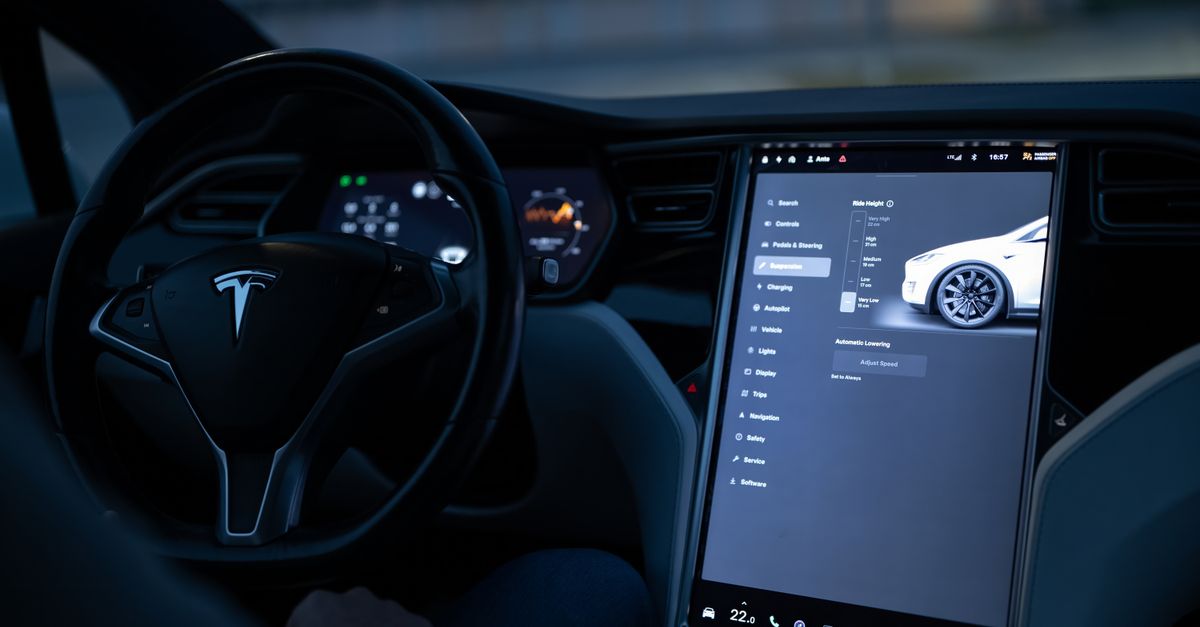
Photo by Vladimir Srajber on Pexels
Rivian and Volkswagen have added an AI assistant to their existing $5.8 billion joint venture, extending the partnership into vehicle‑level conversational interfaces. The move signals that automakers see voice‑first interaction as a differentiator for electric‑car owners.
TechCrunch reports that Rivian did not disclose whether the joint‑venture valuation will increase as a result of the AI addition. The assistant will sit alongside Rivian’s existing infotainment suite and integrate with VW‑owned software platforms. Neither company provided pricing or rollout dates, but the announcement came alongside a broader industry push to embed large‑language‑model capabilities in cars.
AI enters the home‑security market
Thrive Holdings, a venture backed by OpenAI, agreed to buy ADT for $15.3 billion. The acquisition places a traditional alarm provider under the control of an AI‑focused investor. Thrive plans to embed generative‑AI tools into ADT’s monitoring and customer‑service pipelines.
According to TechCrunch, the deal will fold ADT’s sensor network into a data‑rich platform that can generate alerts, suggest remediation steps, and answer homeowner queries in natural language. The purchase price reflects a premium on ADT’s installed base rather than any disclosed AI technology. Thrive has not revealed a timeline for product changes, but the integration will likely require months of software engineering and regulatory review.
Voice‑AI wars heat up in meeting software
Granola announced that it will add a dictation feature to its meeting‑notetaker app. The feature arrives after Wispr introduced meeting‑notes capabilities to its own dictation service. Granola’s move aims to capture users who prefer a single tool for both transcription and structured note generation.
TechCrunch notes that the addition pits Granola directly against Wispr in a niche that blends real‑time speech recognition with AI‑driven summarization. Both companies rely on large‑language‑model back‑ends, but Granola’s implementation focuses on collaborative editing and integration with existing calendar tools. The competitive dynamic suggests that meeting‑software vendors will continue to layer AI features to retain professional users.
Personal AI agents breach defense networks
A source told WIRED that an Accenture employee ran a personal Claude agent on a Department of Defense network for two months. The agent operated without clearance and accessed secure systems before the breach was detected.
WIRED reports that the vulnerability was patched after discovery, but the incident raises questions about how contractors manage personal AI tools on classified infrastructure. Accenture has not commented on policy changes, and the DoD has not released a formal statement. The episode underscores the tension between rapid AI adoption and the need for strict access controls in sensitive environments.
Foundations claim a breakthrough that upends decades of theory
Researchers at Anthropic and OpenAI announced that they have disproved a long‑standing tenet of computer‑science theory. The claim, covered by WIRED, suggests that certain assumptions about algorithmic limits no longer hold in the era of large‑scale language models.
The report describes the result as making “decades of research irrelevant.” Anthropic and OpenAI did not provide quantitative benchmarks, but they cited internal experiments that contradict established complexity bounds. Academic reaction mixes excitement with caution; some scholars liken the sentiment to “overexcited bunnies” chasing new questions. The community has not reached consensus on the implications for future research agendas.
What to watch
Watch for Rivian’s AI assistant rollout schedule and any price adjustments to the joint venture. Track Thrive’s integration milestones at ADT, especially regulatory filings that could affect service continuity. Monitor Granola and Wispr as they release user‑experience updates that may shift market share in the meeting‑software space. Follow the DoD’s response to the Accenture Claude incident, including any new contractor‑AI usage policies. Finally, watch for peer‑reviewed publications from Anthropic and OpenAI that detail the claimed theoretical breakthrough, as they will shape funding and research directions across the AI field.
Related Articles

China clamps AI talent while US warns of anti‑tech backlash
China tightens AI talent flows as U.S. law enforcement flags rising anti‑tech extremism and CEOs overstate AI gains.

Ghosts, Surgeons, and $100M Heist Reveal Tech’s Dark Side
A Scottish surgeon’s legacy, WIRED’s tech hauntings, and a $100 million GPS‑spoofed data‑center theft expose hidden risks for engineers.
Rivian’s AI Bet and 1Password’s Credential Shield Highlight
Rivian acquires Third Dimension, 1Password rolls out AI login agents, and Canva opens its image model as AI tools reshape hardware and software markets.