

When Worms Forget and Stars Change Color

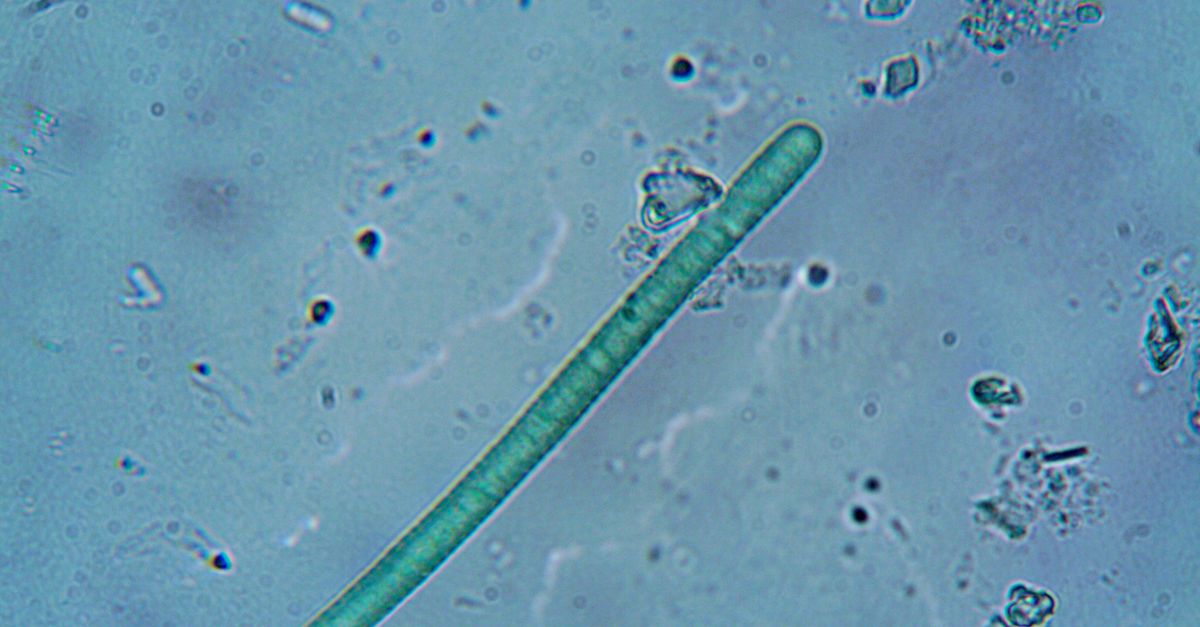
Planarian Memory Transfer Revisited
A team of biologists has begun re‑running the 1960s experiment that claimed flatworms could inherit learned behavior simply by eating each other. The original work sparked headlines because it suggested memory could be a transferable molecule.1234 The new effort shows the worms no longer learn after the supposed transfer.2
In the 1960s, researchers reported that planarian worms shared a learned response after one worm ate another that had been trained to avoid light.12354 The claim rested on a handful of behavioral assays. The replication group repeated the same feeding protocol with identical training conditions and observed no lasting avoidance in the recipient worms. Their data suggest the original effect was a fluke rather than evidence of a memory‑bearing substrate.2
The failure matters because it cuts a shortcut that some theorists have used to argue for non‑synaptic memory storage. If a worm cannot retain a habit after cannibalism, the argument that memory lives in a soluble factor weakens. The replication also underscores how fragile behavioral results can be when the experimental design lacks blind scoring.
Why the Original Claim Crumbled
The 1960s study relied on a small sample of worms and a binary light‑avoidance test.23 Modern standards demand larger cohorts, automated tracking, and statistical rigor.6 When the new researchers applied video analysis, they found that the apparent avoidance was within normal variability.
Moreover, the original paper did not control for stress responses that can mimic learned avoidance.178 The replication introduced a control group that experienced the same handling without the training phase, and both groups behaved identically after feeding. That eliminates the possibility that a stress‑induced change was mistaken for memory transfer.7
Critics have long warned that the planarian story ignored the role of neural circuitry in learning.28 The new results reinforce that view: memory still appears to require synaptic changes, not a mysterious chemical that survives digestion.28
Colorful White Dwarfs Challenge Stellar Models
Astronomers have now documented that white dwarfs—stellar remnants once thought to be uniformly white—can display pink and green hues. The hue depends on the star’s density and the composition of material it accretes from surrounding debris.
Spectroscopic surveys revealed absorption lines that correspond to elements like calcium and magnesium, which scatter light in ways that tint the star’s atmosphere. Denser white dwarfs compress these elements, shifting the color balance toward pink; less dense ones allow more green‑ish scattering. The finding forces a revision of how we model white dwarf cooling curves, which are used as cosmic chronometers.
The discovery also hints at a richer history of planetary system disruption. When a white dwarf pulls in rocky debris, the resulting chemical fingerprint can tell us what the original planetary bodies were made of. The new color data add a visual dimension to that forensic work.
Martian Crust Meteorite Opens New Windows
A meteorite recovered from the Sahara desert has been identified as a fragment of Mars’ ancient crust. Its mineralogy differs from the basaltic rocks most Martian meteorites represent, suggesting it came from a deeper, older layer.
Isotopic analysis shows a composition that matches Martian atmospheric gases measured by past rovers, confirming its origin. The rock’s texture indicates it cooled slowly, preserving crystal structures that can reveal the planet’s early tectonic activity.
Because the sample is rare, scientists can now test theories about Mars’ crustal formation that have relied on indirect remote sensing. If the meteorite’s age aligns with the planet’s hypothesized magnetic field shutdown, it could provide a tangible anchor for that timeline.
What to Watch
The planarian replication will likely prompt journals to re‑evaluate other behavior‑transfer claims that lack rigorous controls. Astronomers will follow up on the color‑dependent density relationship with larger white dwarf catalogs, looking for systematic trends. Planetary scientists plan to request additional Martian crust fragments from desert collections, hoping to build a timeline of crustal evolution. Tracking these threads will reveal whether the new data overturn long‑standing assumptions or simply add nuance to our existing models.
Footnotes
Related Articles
HD Supernova Image Reveals Star’s Survival Secrets
A new high‑definition view of a 1,000‑year‑old supernova offers fresh clues, while parallel imaging breakthroughs reshape archaeology, neuroscience, and volcano monitoring.

New Labs, Maps, Crowdfunding and AI Boost Biological Research
Scientists use ultraquiet chambers, complete fly brain maps, a crowdfunding platform, and upgraded AI reasoning to accelerate biology research.
Psyche’s Unexpected Mars Snapshots Offer Fresh Planetary
NASA’s Psyche probe sent back rare images of Mars, giving scientists a deep‑space view that could sharpen planetary models.