

Africa’s Solar Surge Forces Grid and Mobility Rethink

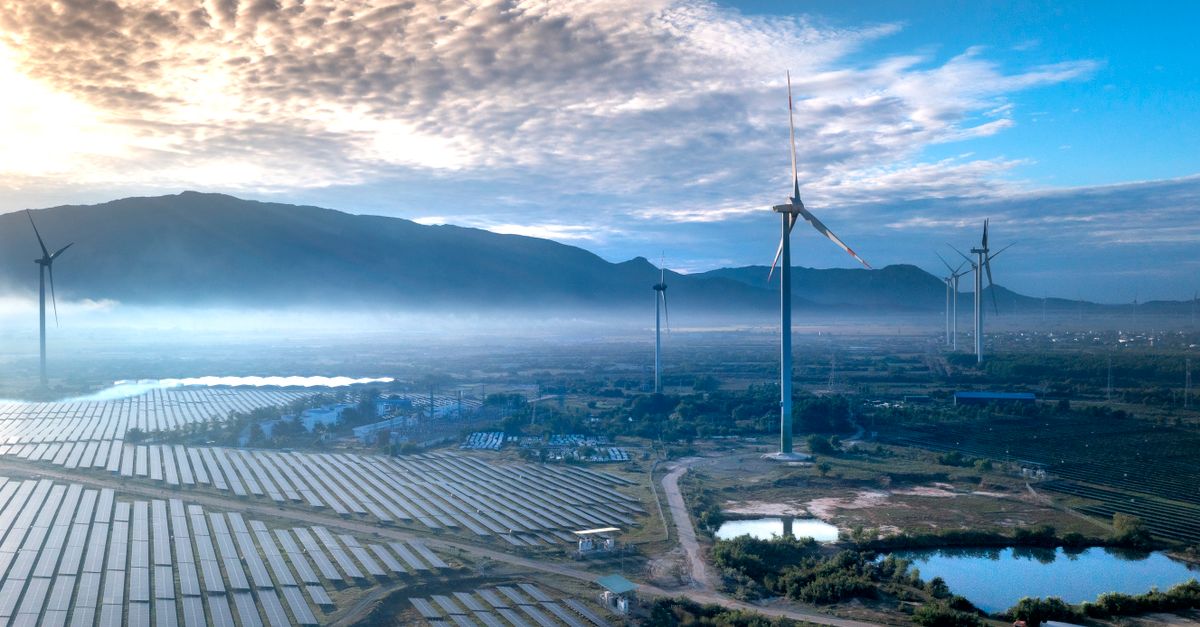
Photo by Quang Nguyen Vinh on Pexels
Solar’s rapid rollout reshapes Africa’s power map
Last week, a series of satellite images showed a swath of new photovoltaic farms lighting up the Sahel, a visual that matches the headline in the Economist’s “Africa’s solar revolution is vast and speedy.” The surge matters because the continent’s electricity demand is climbing about 5 % a year, a rate that would outstrip most supply plans if it remained tied to fossil‑fuel plants.
A new study of the African grid, published this month, quantifies the shift. It finds that by 2050 half of the continent’s electricity could be generated by wind and solar, while the economic case for many planned hydro projects is eroding. The analysis, which overlays demand growth with climate‑adjusted hydropower forecasts, shows that only about half of the slated hydro capacity is cost‑effective under normal rainfall, and that figure drops to roughly 40 % in a dry scenario. The authors flag the Nile, Congo, Zambezi and Niger basins as the remaining hot spots for viable dams, but note that even there delays and overruns are common.
The situation echoes the 1973 oil shock, when sudden price spikes forced Western economies to diversify away from oil‑heavy generation toward nuclear and coal. In Africa, the catalyst is not a price spike but a relentless price decline in wind turbines and solar panels, which now compete head‑to‑head with new dams on a per‑kilowatt basis. The study’s scenario‑based modelling shows that, even if every new hydro plant were built on schedule, the cost per megawatt‑hour would still lag behind the cheapest solar‑plus‑storage bundles projected for the 2020s.
Wind, solar vs hydropower: the economics of the grid
The research team built two demand models – one assuming business‑as‑usual emissions and another capping emissions at a 2 °C pathway – and paired them with a hydropower resource model that factored in normal and “dry” rainfall regimes. Under the most optimistic climate outlook, one‑third of the planned dams would be uneconomical; under the drier forecast, the uneconomic share climbs to 40 %.
Those percentages translate into billions of dollars of stranded investment risk. Large‑scale hydro projects historically suffer from cost overruns that can exceed 30 % of the original budget, while utility‑scale solar installations now achieve 90 % of projected output within a year of commissioning. Moreover, the study points out that half of the economically viable hydro projects are already under construction and will finish within the next decade, leaving the remaining half to compete with a rapidly maturing solar market.
Hydropower does retain a strategic advantage: its ability to store water makes it a natural partner for intermittent renewables. The authors caution that relying solely on expected output could leave regions vulnerable during prolonged droughts, a risk that can be mitigated by pairing dams with solar farms that feed excess generation into the same transmission corridors. This hybrid approach mirrors the post‑World War II U.S. strategy of coupling coal plants with emerging nuclear capacity to smooth load curves.
Solar‑powered EVs: Tunisia’s Bako Motors leads a niche
While the continent’s bulk power picture is evolving, a smaller but visible shift is happening on the roads of North Africa. Tunisian startup Bako Motors, founded in 2021, has rolled out a line of solar‑assisted electric vehicles that claim to source more than half of their daily energy from rooftop panels. The company has produced just 100 units so far but plans to scale production and export over the next year.
The flagship B‑Van can haul 400 kg of cargo, travel 100–300 km on a charge, and costs 24 990 TND (about $8 500). Its sister model, the Bee, seats two, tops out at 45 km h⁻¹, and starts at 18 264 TND (≈ $6 200). According to co‑founder Boubaker Siala, the solar array adds roughly 50 km of range per day, enough for a typical 17 000 km‑per‑year mileage profile. About 40 % of each vehicle’s parts, including lithium‑iron‑phosphate batteries and steel frames, are sourced locally, creating jobs in a market where the overall EV sector is projected to hit $4.2 bn by 2030.
Bako’s approach recalls the 1996 Telecom Act in the United States, which lowered entry barriers for niche providers and spurred a wave of specialized services. By embedding solar panels, Bako sidesteps the continent’s chronic “range anxiety” – a term that analysts at the Africa E‑Mobility Alliance link directly to low‑density charging infrastructure. Bob Wesonga, the Alliance’s operations associate, notes that extending range by 30 mi through solar can tip the adoption calculus for small‑business owners who cannot afford a dedicated charger.
Globally, firms like Aptera Motors sell solar‑enhanced EVs at $30 000 or more, a price point that excludes most African buyers. Bako’s pricing, anchored in locally sourced components, positions it as a pragmatic alternative rather than a luxury. The company’s next model, the X‑Van, promises a two‑passenger layout with a larger cargo bay, suggesting a strategy to capture both passenger and logistics segments.
Pre‑paid solar: Off Grid Electric’s scaling model
The biggest barrier to solar adoption in sub‑Saharan Africa is financing. Off Grid Electric, backed by a $16 million injection from SolarCity, is tackling that problem with a prepaid model that mirrors the mobile‑money boom unleashed by Kenya’s M‑Pesa in the early 2000s. The firm currently serves 25 000 households and aims to reach 100 000 by the end of next year.
Customers pay a modest $6 installation fee, then top up their meter with $5–10 per month via mobile money. The system includes panels, a lithium battery, LED lights and a digital meter that unlocks power when a correct passcode is entered. For Tanzanian families earning roughly $700 annually, the monthly payment is comparable to or cheaper than kerosene lighting, yet delivers 50 times more illumination and the ability to charge a phone – the top reason users sign up.
Helgesen, Off Grid’s CEO, likens the model to the prepaid mobile revolution that unlocked phone penetration across Africa. By decoupling upfront capital costs from consumption, the company reduces risk for both the consumer and the installer. The 10‑year payback horizon aligns with the lifespan of the hardware, allowing Off Grid to recoup its investment while the customer gradually builds equity in the asset.
The prepaid approach also sidesteps the need for on‑site telecom infrastructure; the meter operates with a simple passcode rather than an embedded SIM, making it viable in villages with spotty cellular coverage. This design choice keeps costs down and mirrors the “bring‑your‑own‑phone” strategy that propelled mobile banking in Kenya after the 1996 Telecom Act liberalized the market.
What to watch
The next six months will reveal whether Africa’s renewable surge can overcome entrenched financing and policy hurdles. Regulators in Kenya and South Africa are reviewing tariff structures that could either accelerate or stall utility‑scale solar projects. In Tunisia, the Ministry of Transport is expected to issue new safety certifications for solar‑assisted EVs, a decision that will determine whether Bako Motors can export beyond its domestic market. Finally, Off Grid Electric’s ability to scale prepaid collections hinges on the stability of mobile‑money platforms; any regulatory clampdown on digital payments could choke its growth.
Stakeholders should monitor three signals: (1) the final cost‑benefit analysis of the continent’s pending hydro dams, (2) the rollout of solar‑assisted vehicle registrations in North Africa, and (3) the adoption rate of prepaid solar meters in Tanzania and neighboring states. Each will indicate whether the continent is consolidating a new energy paradigm or merely adding a layer of complexity to an already strained grid.
Related Articles

Anthropic rolls out Claude Fable 5.2 and Mythos 5.2 while
Anthropic launches two new AI models with modest performance gains and simultaneously spends $3.4 billion on natural‑gas turbines, raising questions about its technical and energy strategy.
Startups Bet on Perovskite Power, AI Materials Bounty
Three startups unveil perovskite solar cells, a $1 M AI‑driven materials challenge, and a low‑cost breath‑controlled AAC device, raising questions about practicality and adoption.

Airbnb gala, solar backup, Vulcan launch, space tourism returns
Airbnb’s nonprofit gala sparked online bewilderment, a solar plant proved it can run on stored heat, ULA’s Vulcan readies six boosters, and space tourism rolls onto an Arizona runway.