

US ends old missile watch as commercial rockets ramp up

The program that’s over
The Defense Department pulled the plug on its decades‑old nuclear‑missile‑launch detection system this week. The move ends a program that traced missile launches from the moment they left a silo.
The official notice says a newer sensor suite has been live since 2011123, and a next‑generation version could be fielded within the next twelve months4. The older system, built in the Cold War era, relied on a network of ground‑based radars and infrared stations that required constant human oversight35. Its retirement reflects a shift toward satellite‑based, AI‑driven monitoring that promises faster response times and lower operating costs678.
Critics argue the transition leaves a brief gap in coverage while the new hardware scales up. The Department of Defense has not released a timeline for the final hand‑off, but insiders say the newer platform already feeds data to the same command centers that ran the legacy feeds. The decision also trims a budget line that consumed roughly $200 million annually, freeing cash for other modernization projects.
New detection tech on the horizon
The replacement system leans on constellations of low‑Earth‑orbit sensors that can spot a launch plume from any angle. Engineers say the architecture reduces blind spots that plagued the ground network, especially over the ocean.
Because the sensors sit above the atmosphere, they can relay data in near‑real‑time to automated threat‑analysis software6. That software flags trajectories that match known missile profiles, then hands the alert to human operators for confirmation. The approach mirrors commercial satellite‑imaging pipelines that have become routine in the last decade.
The upcoming generation, slated for a test launch within twelve months, will add on‑board processing to cut latency further8. If the test succeeds, the Defense Department plans to field dozens of these satellites over the next five years, effectively replacing the old radar lattice with a flexible, upgradeable space layer.
Commercial launch cadence accelerates
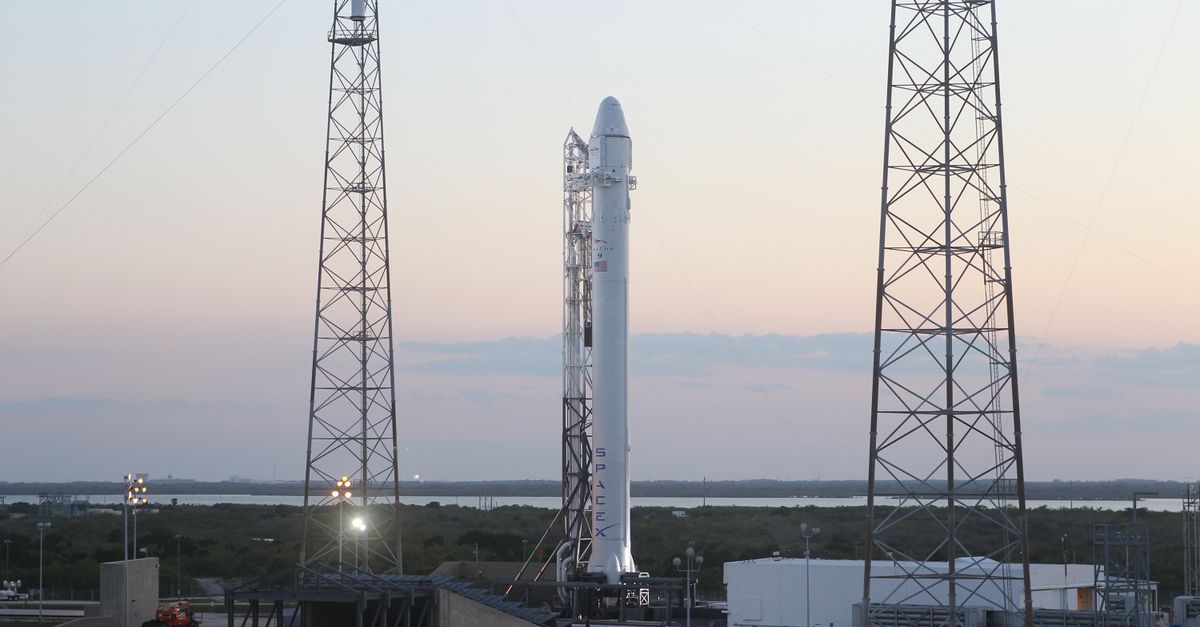
While the Pentagon retools its eyes on the sky, private launch firms are busy filling the launch‑pad calendar. SpaceX recently fired off three rockets in a single weekend, a triple‑header that demonstrated rapid turnaround and re‑usability.
The streak came on the back of a busy year for the company, which has been cranking out Starlink satellites at a pace few thought sustainable. The ability to stack launches like a production line reduces per‑launch costs and keeps the company’s launch pads humming.
Rocket Lab, meanwhile, secured a sizable contract that will see its Electron rockets delivering payloads for a mix of government and commercial customers. The deal, announced in a brief statement, underscores the firm’s growing role as a niche provider for smaller satellites that need dedicated rides.
Blue Origin is also stepping up its game. The company filed a request with the FAA to approve up to fifty New Glenn launches and an equal number of booster landings per year. If granted, the permission would let Blue Origin operate a high‑frequency launch schedule that rivals SpaceX’s cadence, but with a heavy‑lift vehicle that targets larger payloads and deep‑space missions.
The combined activity hints at a broader industry trend: launch providers are moving from occasional, high‑profile missions to a near‑continuous flow of payloads. That shift pressures the government’s detection infrastructure to keep pace, especially as more launches originate from commercial sites that may not be pre‑registered with defense agencies.
Research that could reshape space hardware
In the same week the military announced its program shutdown, a roundup of science stories highlighted work that could soon influence how we build in space. One piece described experiments at the Large Hadron Collider that probed quantum entanglement over unprecedented distances – a reminder that fundamental physics still yields surprises that could affect future communication satellites.
Another story explored how ancient humans in the Ice Age used psychoactive plants, a niche finding that adds depth to our understanding of early cognition. While not directly tied to aerospace, the research illustrates how interdisciplinary studies can surface unexpected insights.
Perhaps most relevant to the launch sector is a report on engineered yeast that can produce building‑block polymers for habitats on Mars. If the biotech scales, future missions could ship compact yeast cultures instead of heavy construction materials, shaving launch mass and cost.
These scientific threads, though peripheral to the immediate launch news, signal that the ecosystem feeding the space industry is diversifying. Advances in quantum communication, bio‑fabrication, and even archaeology can ripple into launch‑vehicle design, payload integration, and mission architecture.
What to watch
Track the FAA’s decision on Blue Origin’s request for fifty New Glenn launches and booster landings; approval would cement a new high‑frequency heavy‑lift capability in the U.S. market. Also monitor the first test flight of the next‑gen missile‑detection satellite, scheduled within the next year, as its performance will set the bar for how quickly the defense community can react to launch events. Finally, keep an eye on SpaceX’s launch cadence reports and Rocket Lab’s contract milestones, because any slowdown could expose gaps in the newly thin‑skinned detection network.
Footnotes
Related Articles
Tech, Tension, and Deals: Space, War, and Energy Moves in 2024
NASA seeks solid foreign deals, Ukraine scores a drone boat kill, Bill Gates backs 21 energy startups, and Kairos Power lands $100M for a 50‑MW reactor for Google.
Terra's $52M Bet on Southern Defense Amid SpaceX Turbulence
Terra Industries raises $52 million to build defense infrastructure for the Global South as launch bottlenecks and geopolitical strikes reshape the sector.

Pentagon trims classification on secret space programs
DoD policy lowers secrecy on key space projects, opening tech to allies and industry as the US seeks an edge over China and Russia.