

Batteries Beat Gas Turbines as Data Centers Cut Power Costs

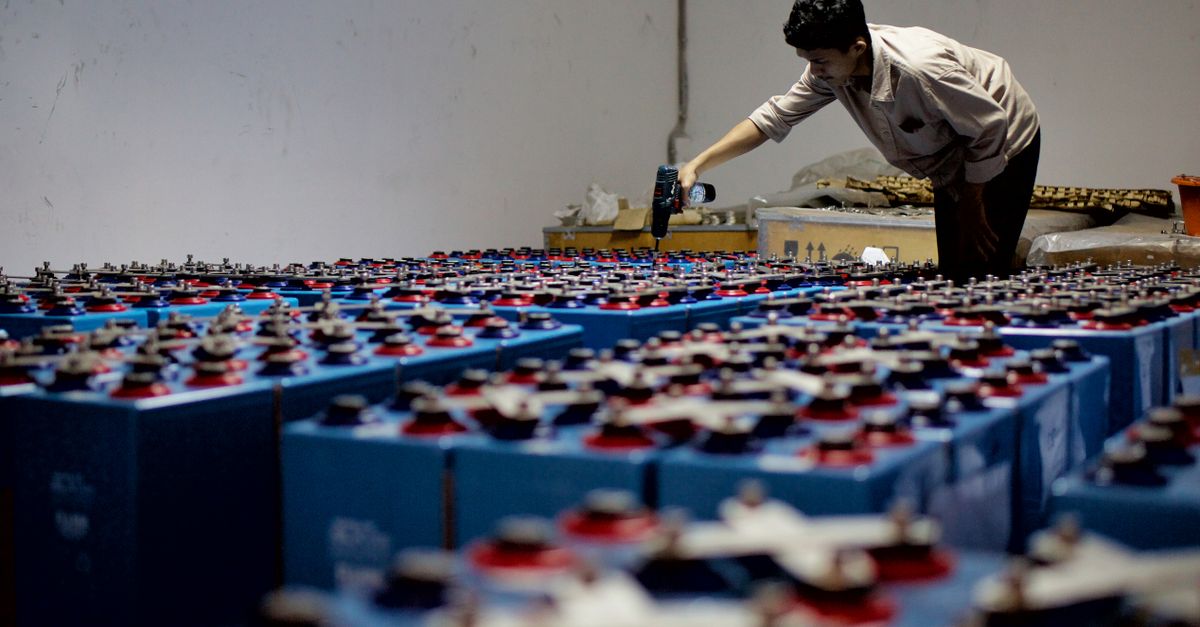
Photo by Heru Dharma on Pexels
Batteries outprice gas turbines
Batteries now cost less than the natural‑gas turbines that power many data centers, a shift that could reshape how the industry meets its massive electricity demand. TechCrunch reported that the price advantage emerges as the data‑center boom pushes turbine prices upward, making battery storage the cheaper option for on‑site power.
The cost comparison matters because turbines have long been the default backup for outages and peak loads. When a data center’s power bill is dominated by diesel or natural‑gas generators, operators must balance reliability against a growing carbon‑footprint. By swapping a turbine for a battery bank, a facility can shave capital expense while gaining faster response times—batteries discharge in seconds, turbines take minutes to spin up. The article does not provide a dollar figure, but the headline itself signals a market‑wide inflection point.
Industry analysts note that the battery price decline is driven by economies of scale in electric‑vehicle production and improvements in cell chemistry. Those trends spill over into the hyperscale sector, where dozens of megawatts of storage can be installed alongside server racks. The immediate effect is a tighter cost curve for new builds, especially in regions where gas supply is volatile or regulated.
Demand response scales to a gigawatt
Google announced that it has integrated a full gigawatt of demand‑response capacity into its long‑term energy contracts across the United States. The company’s statement details agreements with utilities such as Indiana Michigan Power, Tennessee Valley Authority, Entergy Arkansas, Minnesota Power and DTE Energy, each embedding demand‑response as a core resource for new data‑center connections.
Demand response lets Google throttle or shift a slice of its machine‑learning workloads when the grid signals stress. By curbing power draw during peak periods, the company helps utilities balance supply and demand without building new peaker plants. The Google press release emphasizes that this flexibility translates into “smarter utilization of U.S. electricity systems” and can lower overall system costs.
The practical upside is twofold. First, utilities can defer expensive transmission upgrades because large, flexible loads absorb excess capacity. Second, Google’s own operating costs shrink as it avoids peak‑price electricity. The announcement also references broader efforts—solar, geothermal and long‑duration storage—to create a more resilient grid. While the company admits that demand response is location‑dependent, the 1 GW figure marks a tangible benchmark for the industry.
Transparency in data‑center deals gains traction
Amazon disclosed that it will stop using nondisclosure agreements (NDAs) when negotiating data‑center sites with local governments. The move follows a similar policy shift by Microsoft earlier this year. Both firms cite community backlash over secretive AI‑infrastructure projects, which have spurred moratoriums from New York to San Francisco.
By eliminating NDAs, Amazon hopes to rebuild trust with municipalities that fear hidden environmental or zoning impacts. The policy change does not guarantee approval of every project, but it forces a public dialogue that was previously muted. Critics argue that transparency alone won’t solve the underlying concerns about AI‑driven power draw and land use, yet the shift signals a strategic response to growing regulatory pressure.
The broader implication is a potential recalibration of how tech giants secure real‑estate for compute capacity. If other players adopt similar openness, the industry could see more community‑level input, faster permitting, and perhaps a more balanced distribution of data‑center footprints across regions.
UK dedicated servers illustrate market diversification
HCE’s UK‑focused offering provides a concrete snapshot of how regional market dynamics intersect with global energy trends. Since 2012 the company has leveraged London‑based facilities—Telehouse North, Equinix LD8, City Reach (DDCL) and Volta—to deliver dedicated servers and cloud infrastructure. In Q2 2018 HCE began offering 1 Gbps and 10 Gbps connections backed by Tier 1 carriers like NTT, Telia, GTT, TATA and Cogent, plus peering at LINX and LONAP.
The entry‑level dedicated server spec lists an Intel Xeon E3‑1240v5 CPU, 16 GB RAM, 240 GB SSD or 1 TB HDD, and 10 TB of monthly data transfer, priced at €139 per month (about $154 or £120). While the pricing is modest, the service includes dual power supplies, DDoS protection and virtualization‑ready hardware—features that matter for latency‑sensitive workloads.
HCE’s expansion reflects a post‑Brexit expectation that the UK’s telecom regulatory environment will diverge from the EU, potentially creating a more liberal market for dedicated hosting. The company’s partnership with local network‑operations‑centers (NOCs) and its reliance on premium internet backbones illustrate how regional infrastructure can attract customers who need low‑latency, high‑availability compute without the scale of hyperscale clouds.
What to watch
The convergence of cheaper batteries, gigawatt‑scale demand response, and greater deal transparency sets up a competitive test for data‑center developers. Watch for announcements from other hyperscalers on battery‑backed backup strategies, especially in regions where gas prices remain high. Track whether additional cloud providers adopt Amazon’s NDA‑free policy, and monitor local government responses in key markets like Texas and the Midwest. Finally, keep an eye on regulatory filings that quantify the cost savings from demand‑response participation, as those numbers will likely become a bargaining chip in future utility contracts.
Related Articles
Ambrosia's Texas Battery Plant and a Week of Unusual Gadgets
Ambrosia Energy's 10 GWh factory signals a shift for off‑grid data centers while new consumer tech from Formlabs, Breville, JackRabbit, and Nothing lands on desks and kitchens.

Diesel Surge, SEC Quorum Shift
Three regulatory and market shocks—rising diesel, a single‑person SEC quorum, and Norway's smart‑glass limits—reshape logistics, finance, and privacy.

AI, batteries, and Doom: tech twists in 2026
A look at AI's role in robotaxis, a NYC battery startup, a SQL Doom demo, and Sony camera naming quirks.